Skip to content

archived edition · 2026-09-26

PaperraftFind the AI research
worth testing.

Understand what a paper changes, what it costs, and whether it fits your next build. Explore research on faster LLM inference, agent memory, and evaluation, with the original sources in reach.

Start with a brief. Follow the evidence. Choose a test.

edition
2026-09-26
briefs
42
research areas
15
independent implementations
32

21 of 42 papers in the index (50%) have no independent implementations.

Research index

Search by topic, browse a research area, or sort by date. Read a brief, open the original paper, and inspect the available evidence before deciding what to test.

showing30 of 42
sort by
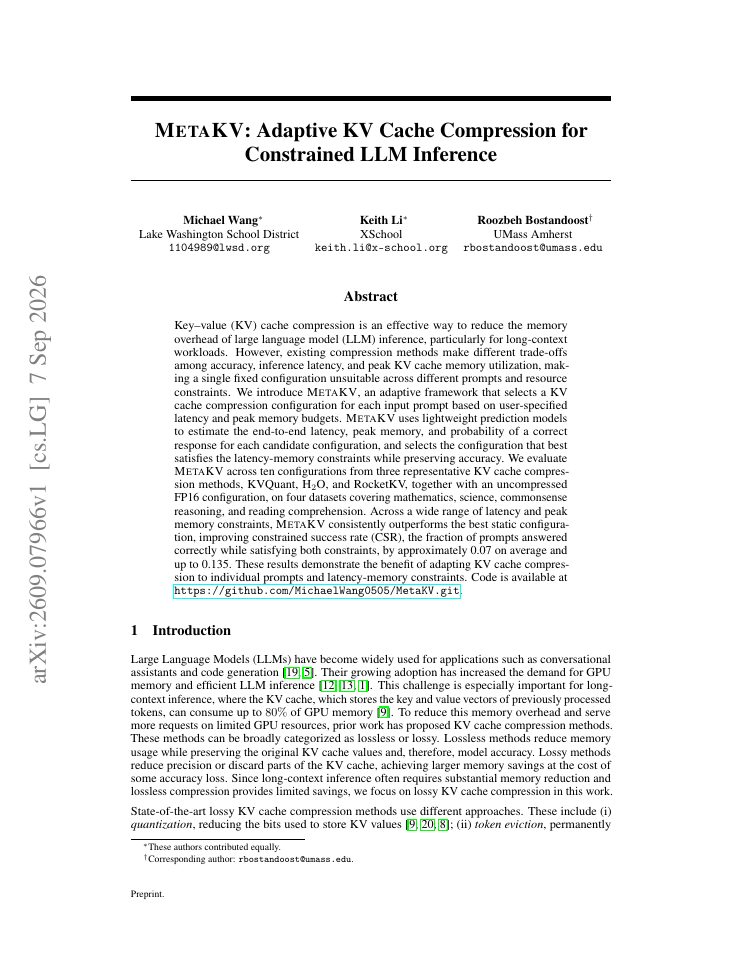
First page of MetaKV: Adaptive KV Cache Compression for Constrained LLM Inference
KV cachetest

MetaKV: Adaptive KV Cache Compression for Constrained LLM Inference

MetaKV replaces a single fixed KV cache compression configuration with per-prompt selection among existing methods (KVQuant, H2O, RocketKV, FP16) guided by lightweight predictors of latency, peak memory, and correctness. The cost is training and maintaining three prediction models plus a selection step per prompt, adding engineering complexity and a small inference-time overhead on top of the underlying compressors. It can fail if the accuracy or latency predictors mispredict on out-of-distribution prompts or on hardware and models different from the evaluation setup, causing constraint violations or suboptimal choices.

observed signal
2impl.
0stars
0citations
—claimed gain
abstract onlyReview decisionDownload skill ↓Original paper ↗
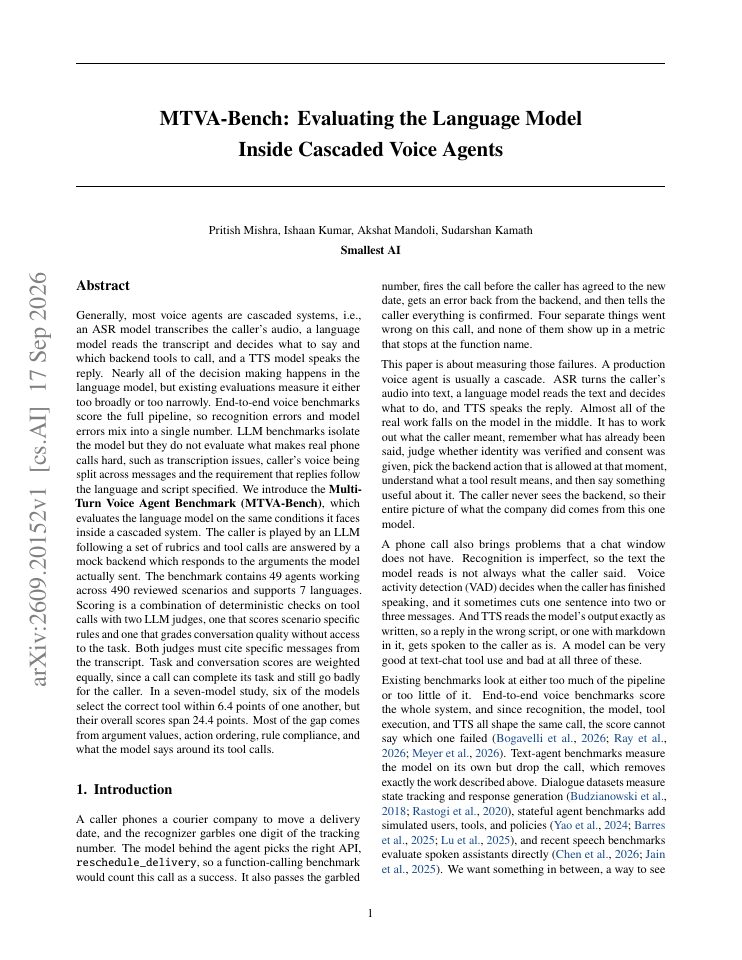
First page of MTVA-Bench: Evaluating the Language Model Inside Cascaded Voice Agents
agent evaluationtest

MTVA-Bench: Evaluating the Language Model Inside Cascaded Voice Agents

MTVA-Bench replaces end-to-end voice pipeline scoring and generic LLM benchmarks with an isolated evaluation of the language model under realistic call conditions (ASR errors, split utterances, script and language constraints), using an LLM caller, a mock backend, deterministic tool-call checks, and two citation-requiring LLM judges across 490 scenarios in 7 languages. Adopting it costs the engineering effort of integrating an agent harness and mock backends plus recurring LLM judge inference, with no model retraining required. It can fail through judge unreliability or citation gaming, limited scenario coverage relative to a real production domain, and overfitting to the benchmark's simulated caller rather than actual human callers.

observed signal
3impl.
4stars
0citations
—claimed gain
abstract onlyReview decisionDownload skill ↓Original paper ↗
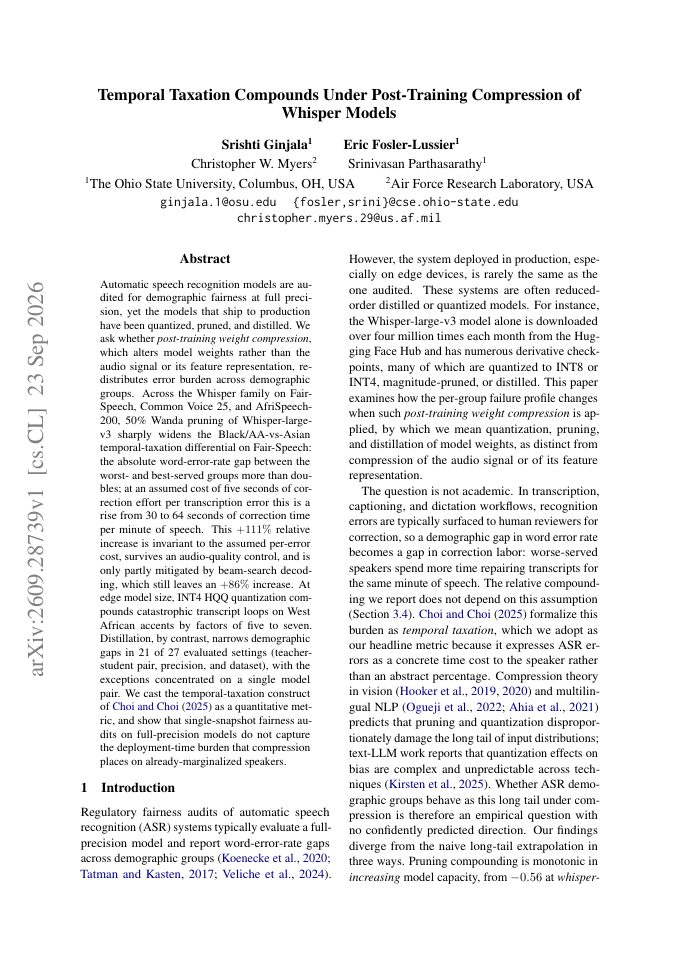
First page of Temporal Taxation Compounds Under Post-Training Compression of Whisper Models
sparsity and pruningtest

Temporal Taxation Compounds Under Post-Training Compression of Whisper Models

This replaces the common practice of auditing ASR fairness only at full precision with a requirement to re-audit the exact compressed artifact (pruned, quantized, or distilled) that will ship. The cost is additional evaluation compute on demographic-sliced benchmarks such as Fair-Speech, Common Voice, and AfriSpeech-200, plus potential rollback of a compression choice; no extra training infrastructure is needed. Failure modes include deploying 50% Wanda pruning or INT4 quantization that sharply widens error gaps for Black/AA and West African speakers, relying on beam search as a fix when it only partly mitigates the gap, and assuming distillation is universally safe when exceptions concentrate on specific teacher-student pairs.

observed signal
1impl.
4stars
0citations
—claimed gain
abstract onlyReview decisionDownload skill ↓Original paper ↗
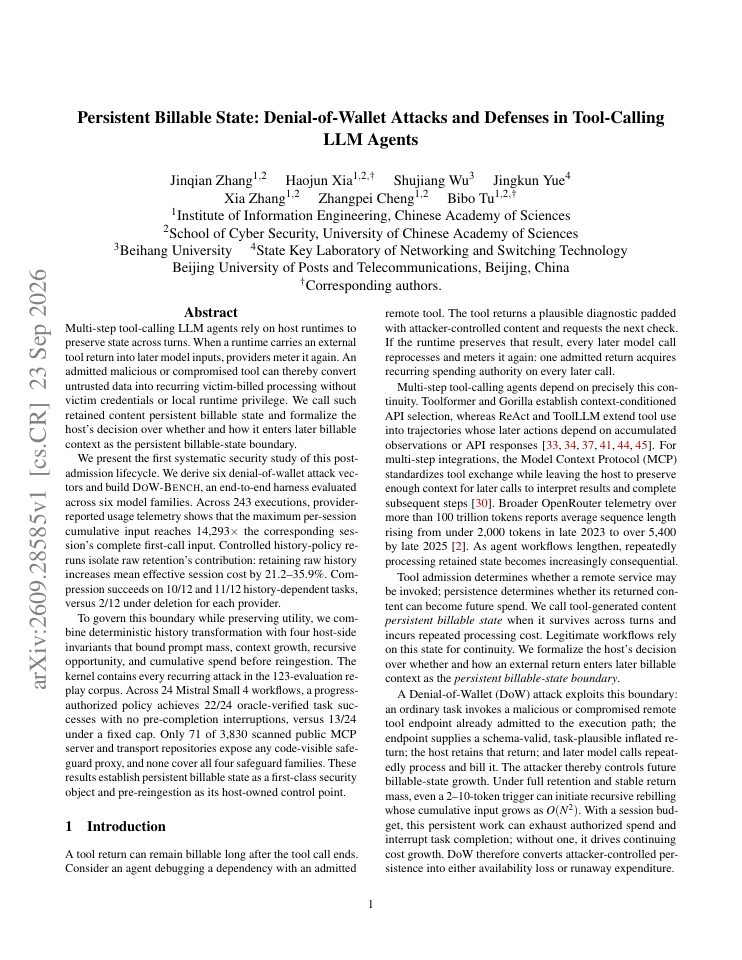
First page of Persistent Billable State: Denial-of-Wallet Attacks and Defenses in Tool-Calling LLM Agents
safety and guardrailstest

Persistent Billable State: Denial-of-Wallet Attacks and Defenses in Tool-Calling LLM Agents

The method replaces unfiltered carryover of tool outputs and conversation history into subsequent billable model inputs with deterministic pre-reingestion history transformation (compression or deletion) governed by four host-side invariants bounding prompt mass, context growth, recursion depth, and cumulative spend. The cost is host-runtime engineering complexity, extra logic per turn, and a quality risk: aggressive compression or deletion degrades history-dependent tasks (2/12 success under deletion versus 10–11/12 under compression). It can fail when a policy misclassifies legitimately large tool returns as attacks, when providers meter tokens in ways the invariants do not anticipate, or when an adversary distributes billable state across many small returns that individually pass the bounds.

observed signal
3impl.
21stars
0citations
—claimed gain
abstract onlyReview decisionDownload skill ↓Original paper ↗
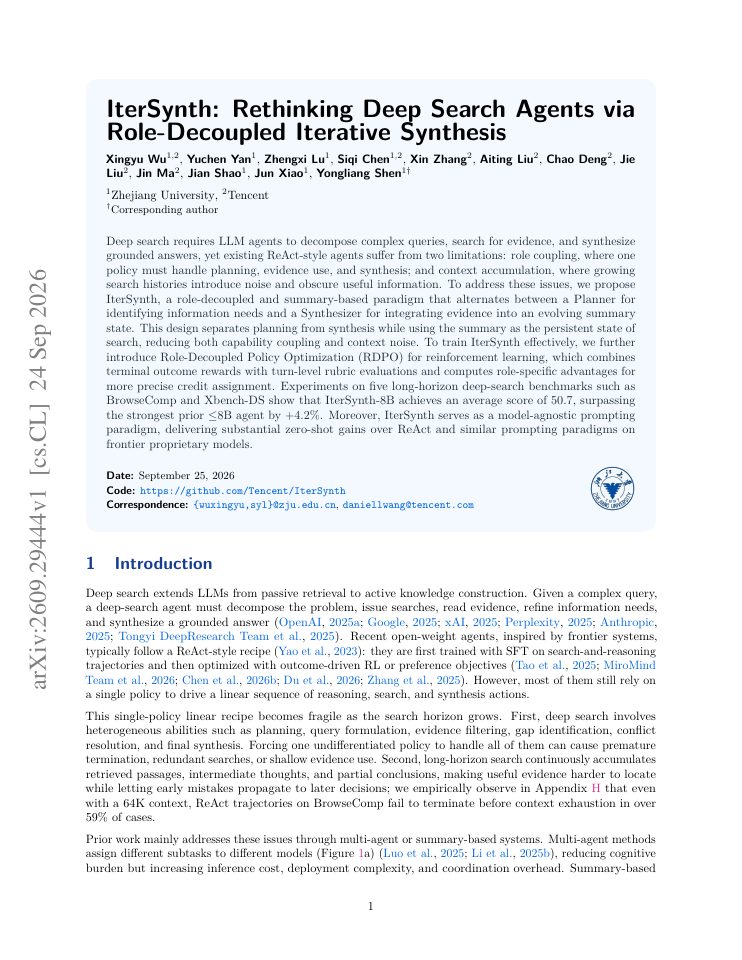
First page of IterSynth: Rethinking Deep Search Agents via Role-Decoupled Iterative Synthesis
planning and decompositiontest

IterSynth: Rethinking Deep Search Agents via Role-Decoupled Iterative Synthesis

Replaces single-policy ReAct-style agents, where one model interleaves planning, evidence handling, and synthesis over an accumulating context, with an alternating Planner and Synthesizer that maintain a compact evolving summary as the persistent search state. As a prompting paradigm it costs additional LLM calls per turn (planner plus synthesizer) and requires summarization logic; the trained variant requires RL (RDPO) with rubric-based turn-level rewards, which is a non-trivial training pipeline. It can fail through summary drift, where early synthesis errors or omitted evidence persist in the summary state and misdirect subsequent planning, and gains on proprietary models are asserted without quantified margins in the abstract.

observed signal
3impl.
137stars
0citations
—claimed gain
abstract onlyReview decisionDownload skill ↓Original paper ↗
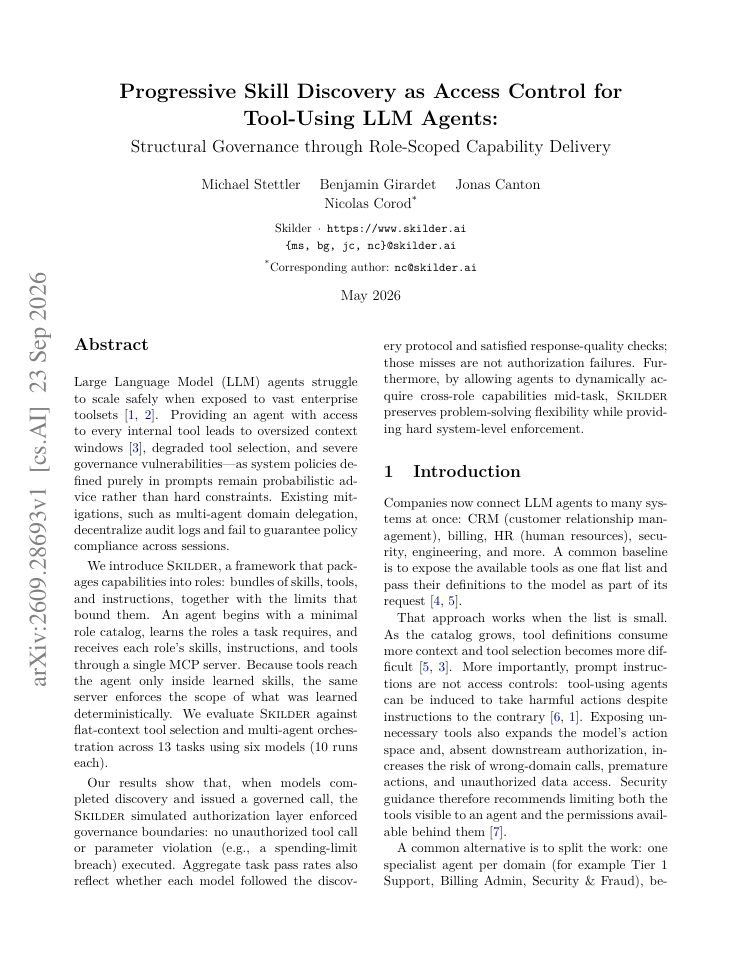
First page of Progressive Skill Discovery as Access Control for Tool-Using LLM Agents: Structural Governance through Role-Scoped Capability Delivery
safety and guardrailstest

Progressive Skill Discovery as Access Control for Tool-Using LLM Agents: Structural Governance through Role-Scoped Capability Delivery

Replaces exposing the full enterprise toolset in a flat context (or delegating across multi-agent setups) with a single MCP server that delivers tools, skills, and instructions only inside learned roles, enforcing scope deterministically at the system level rather than through prompts. Costs added infrastructure and protocol complexity: an authorization layer, a role catalog, a mandatory discovery step, and possible task failures when a model does not follow the discovery protocol or complete role acquisition before acting. Can fail in practice through misconfigured role definitions, models that skip or stall during discovery, degraded pass rates from response-quality misses (distinct from authorization failures), and unproven robustness given the evaluation covers only 13 tasks with six models.

observed signal
2impl.
14stars
0citations
—claimed gain
abstract onlyReview decisionDownload skill ↓Original paper ↗
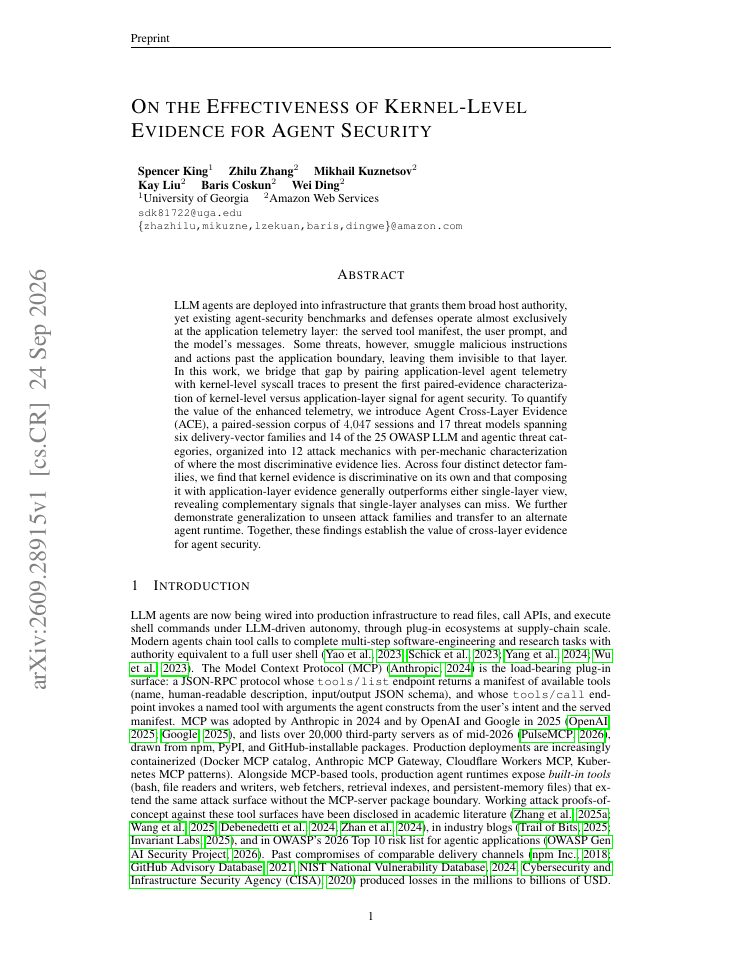
First page of On the Effectiveness of Kernel-Level Evidence for Agent Security
safety and guardrailstest

On the Effectiveness of Kernel-Level Evidence for Agent Security

The approach replaces detection based solely on application-layer agent telemetry (tool manifests, prompts, model messages) with paired application telemetry plus kernel-level syscall traces, exposing attacks that bypass the application boundary. Costs include syscall-trace collection infrastructure on the agent host, higher telemetry volume, and training or configuring detectors on the paired evidence, none of which requires GPU capacity. Detection can fail on novel attack mechanics outside the 17 modeled threat families, and syscall traces may not transfer cleanly across operating systems, runtimes, or sandboxed deployment environments where kernel access is unavailable.

observed signal
1impl.
14stars
0citations
—claimed gain
abstract onlyReview decisionDownload skill ↓Original paper ↗
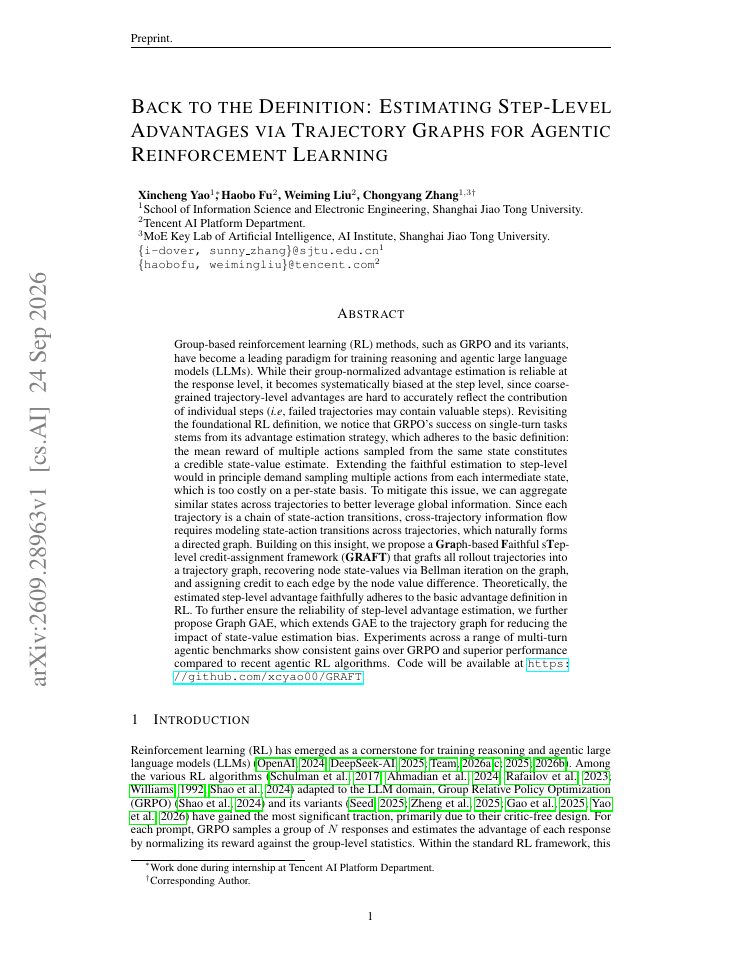
First page of Back to the Definition: Estimating Step-Level Advantages via Trajectory Graphs for Agentic Reinforcement Learning
efficient trainingwatch

Back to the Definition: Estimating Step-Level Advantages via Trajectory Graphs for Agentic Reinforcement Learning

GRAFT replaces GRPO's trajectory-level advantage estimation with step-level credit assignment: rollout trajectories are merged into a trajectory graph, node state-values are recovered via Bellman iteration, and per-step advantages are assigned from node value differences, with a graph extension of GAE to reduce value-estimation bias. The cost is additional graph construction and iterative value computation over all rollouts, plus the engineering complexity of state-matching and graph management on top of an already expensive multi-turn RL training loop. It can fail if intermediate states rarely align across trajectories (yielding a sparse graph and unreliable value estimates), and the claimed gains over GRPO are benchmark-dependent with no quantified figures given in the abstract.

observed signal
1impl.
14stars
0citations
—claimed gain
abstract onlyReview decisionDownload skill ↓Original paper ↗
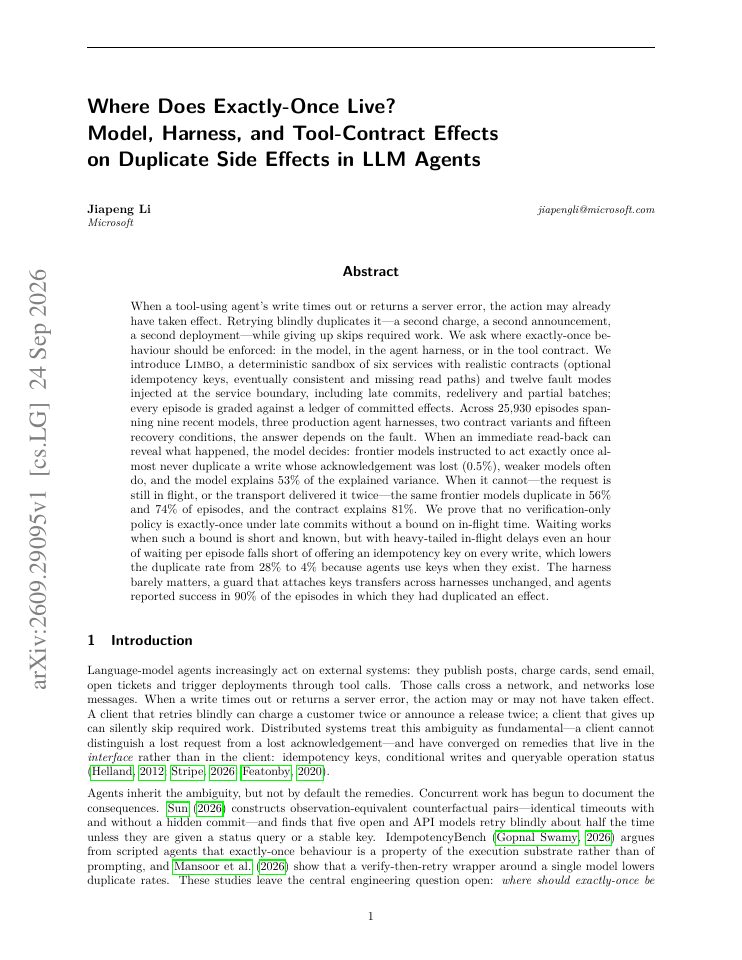
First page of Where Does Exactly-Once Live? Model, Harness, and Tool-Contract Effects on Duplicate Side Effects in LLM Agents
failure recoveryadopt

Where Does Exactly-Once Live? Model, Harness, and Tool-Contract Effects on Duplicate Side Effects in LLM Agents

The technique replaces blind retry or model-level caution when a tool write times out or errors: a small harness guard that attaches an idempotency key to every write, letting the service deduplicate redeliveries. Cost is modest engineering (a key-generation and propagation guard, plus tool contracts that accept keys) with no model, GPU, or serving overhead; where contracts cannot accept keys, only waiting with a known in-flight bound partially substitutes. It fails when tool APIs do not support idempotency keys, when faults occur outside the service boundary the guard covers, and agents still misreport success (90% of duplicated episodes were reported as successful), so ledger-level auditing remains necessary.

observed signal
1impl.
14stars
0citations
7xclaimed gain
abstract onlyReview decisionDownload skill ↓Original paper ↗
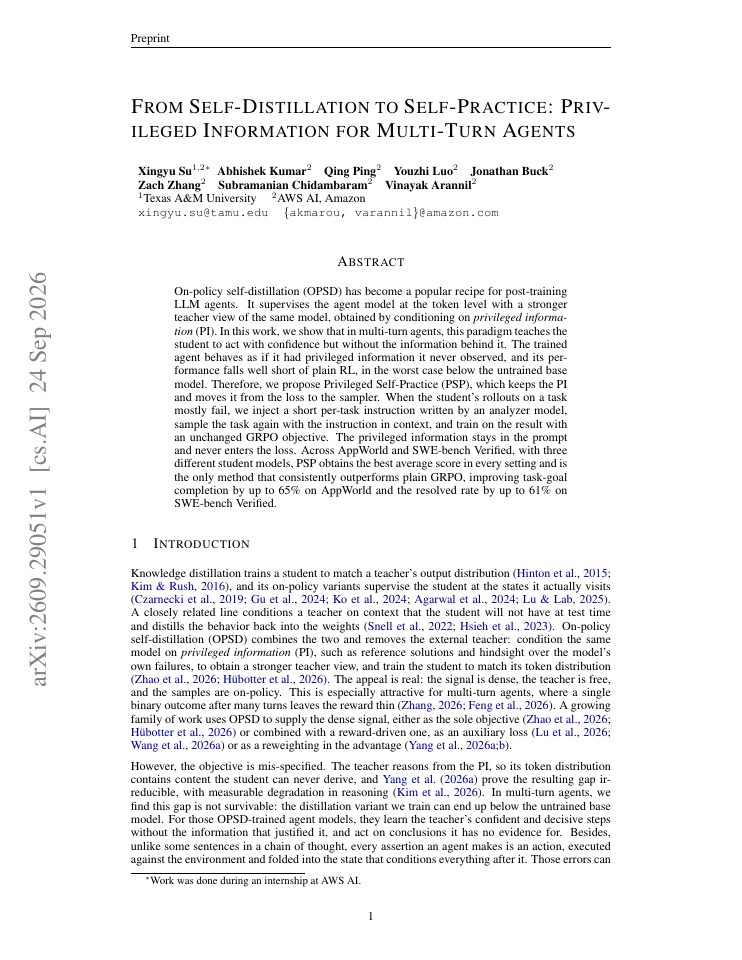
First page of From Self-Distillation to Self-Practice: Privileged Information for Multi-Turn Agents
efficient trainingtest

From Self-Distillation to Self-Practice: Privileged Information for Multi-Turn Agents

PSP replaces on-policy self-distillation, in which token-level supervision from a privileged-information teacher causes the student to act confidently without the underlying information, with a sampler-side intervention: an analyzer model writes a short per-task instruction when rollouts mostly fail, the task is resampled with that instruction in context, and training proceeds with an unchanged GRPO objective. The cost is an additional analyzer model and a second sampling pass per failing task, plus the existing infrastructure for GRPO-based RL post-training on multi-turn agent benchmarks. It can fail if the analyzer's instructions are inaccurate or unhelpful, if the workload lacks a clear failure signal to trigger instruction injection, or if the team's pipeline cannot support on-policy RL rollouts within a 24 GB GPU budget without API-based student models.

observed signal
2impl.
135stars
0citations
1.65xclaimed gain
abstract onlyReview decisionDownload skill ↓Original paper ↗
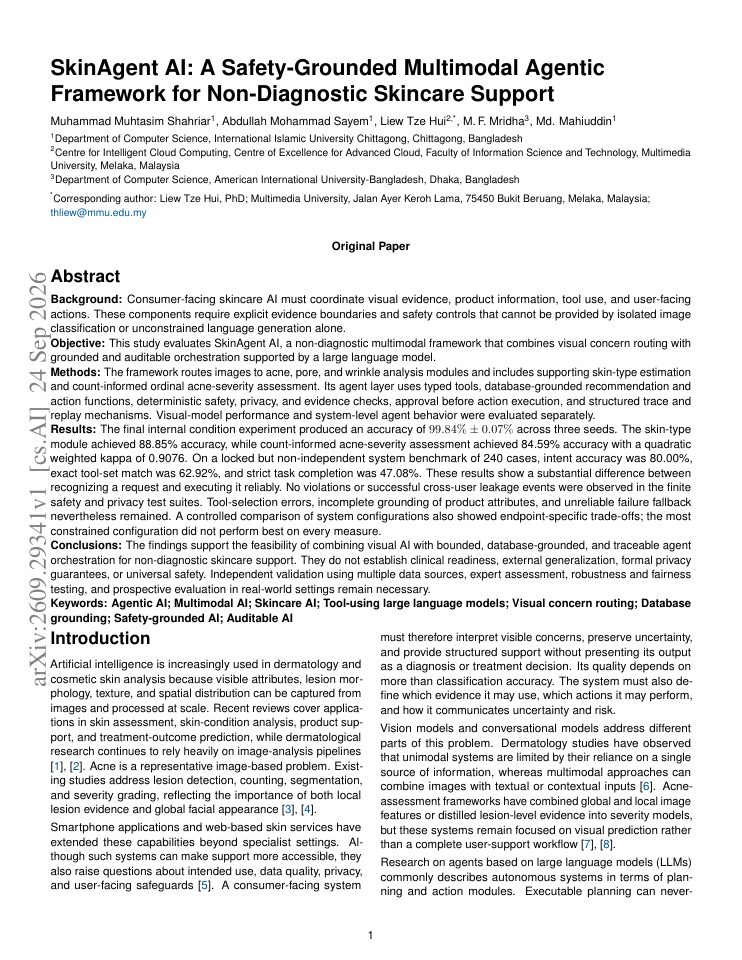
First page of SkinAgent AI: A Safety-Grounded Multimodal Agentic Framework for Non-Diagnostic Skincare Support
safety and guardrailstest

SkinAgent AI: A Safety-Grounded Multimodal Agentic Framework for Non-Diagnostic Skincare Support

The framework replaces free-form LLM tool calling with bounded orchestration: typed tools, database-grounded recommendation functions, deterministic safety and privacy checks, approval gates before state-changing actions, and structured trace and replay. It costs engineering complexity and added latency from deterministic check layers, while the LLM backbone can run on third-party APIs, so no training or cluster is required. Failure modes are documented in the paper itself: strict task completion was only 47.08% on a locked non-independent benchmark, with tool-selection errors, incomplete product-attribute grounding, and unreliable failure fallback remaining after adoption.

observed signal
2impl.
138stars
0citations
—claimed gain
abstract onlyReview decisionDownload skill ↓Original paper ↗
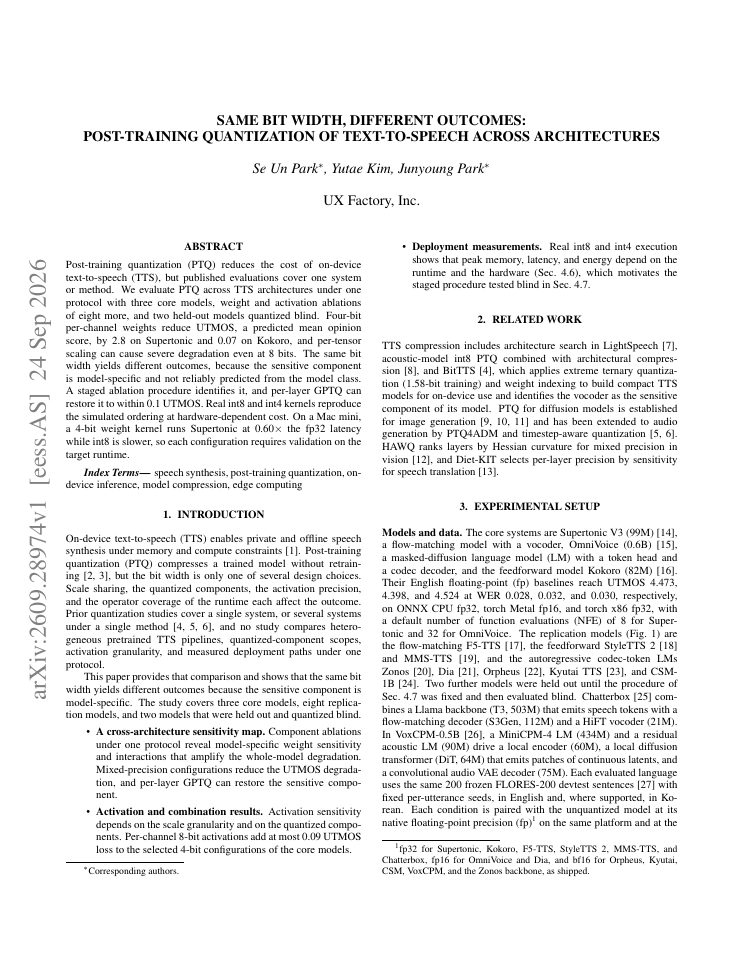
First page of Same Bit Width, Different Outcomes: Post-Training Quantization of Text-to-Speech Across Architectures
quantizationtest

Same Bit Width, Different Outcomes: Post-Training Quantization of Text-to-Speech Across Architectures

The method replaces full-precision TTS weights with 4-bit per-channel quantization, using a staged ablation to locate the model-specific sensitive component and per-layer GPTQ to repair it. The cost is a quantization and validation pipeline per model and target runtime: outcomes at the same bit width vary by architecture (2.8 UTMOS loss on Supertonic versus 0.07 on Kokoro), so no single recipe transfers. What can fail is quality collapse from per-tensor scaling even at 8 bits, misidentified sensitive layers when skipping the ablation, and kernels that are slower than fp32 on a given runtime despite lower bit width.

observed signal
2impl.
672stars
0citations
1.67xclaimed gain
abstract onlyReview decisionDownload skill ↓Original paper ↗
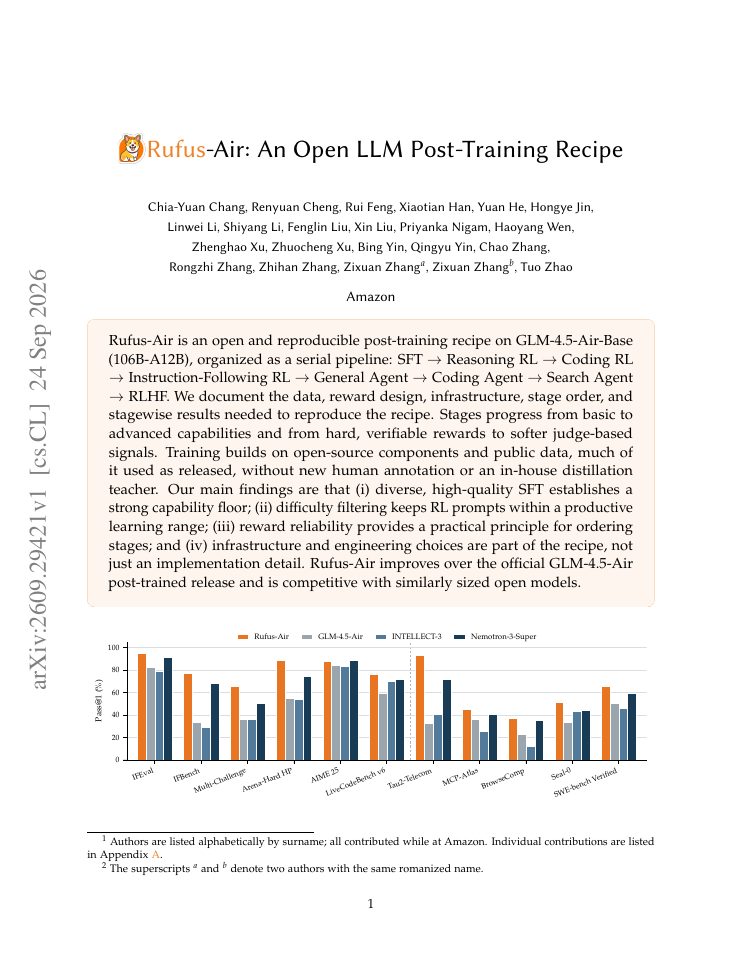
First page of Rufus-Air: An Open LLM Post-Training Recipe
efficient trainingwatch

Rufus-Air: An Open LLM Post-Training Recipe

It replaces ad hoc single-stage fine-tuning with a documented serial pipeline of SFT followed by staged RL ordered by reward verifiability, ending in judge-based RLHF. The cost is substantial: post-training a 106B-A12B MoE model across eight RL stages requires multi-node GPU infrastructure, orchestration complexity, and compute budgets far beyond a single 24 GB GPU. What can fail is reward reliability at softer stages, difficulty miscalibration of RL prompts, and dependence on specific base-model behavior and engineering choices that do not transfer to smaller models.

observed signal
1impl.
121stars
0citations
—claimed gain
abstract onlyReview decisionDownload skill ↓Original paper ↗
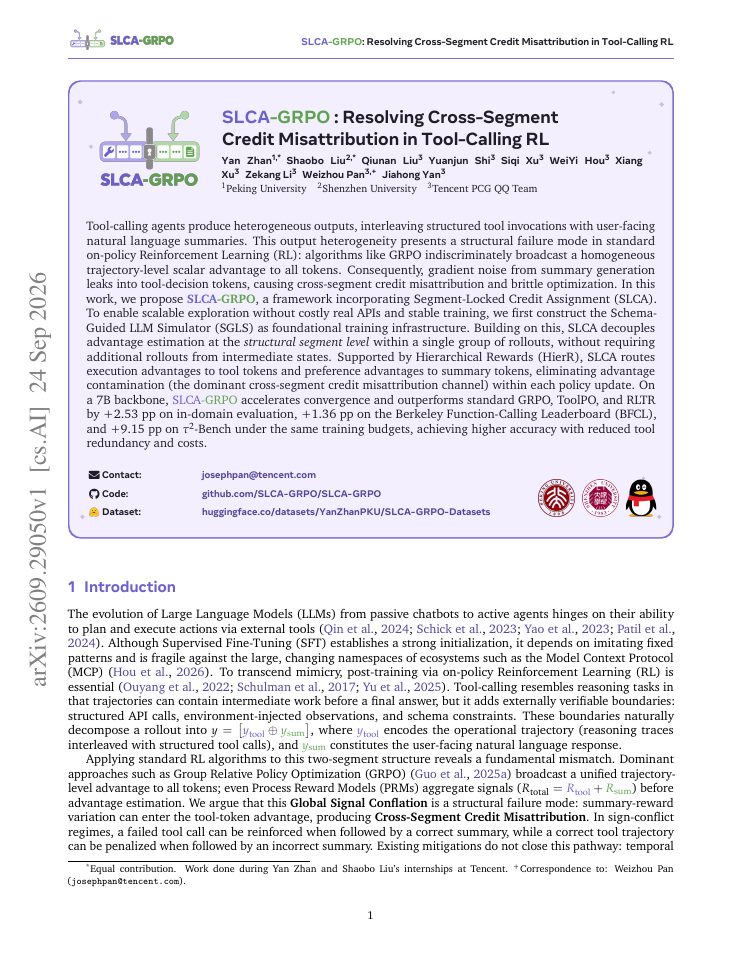
First page of SLCA-GRPO: Resolving Cross-Segment Credit Misattribution in Tool-Calling RL
tool usewatch

SLCA-GRPO: Resolving Cross-Segment Credit Misattribution in Tool-Calling RL

SLCA-GRPO replaces standard GRPO's trajectory-level scalar advantage broadcast with segment-decoupled advantage estimation that routes execution rewards to tool-call tokens and preference rewards to summary tokens, trained against a schema-guided LLM simulator instead of real APIs. The cost is substantial infrastructure: building the SGLS simulator, implementing hierarchical rewards and segment-level advantage computation, and running multi-rollout RL training on a 7B model, which strains a single 24 GB GPU and a small team. Failure modes include simulator-to-real API distribution shift that invalidates the learned tool policy, incorrect segment boundaries reintroducing credit misattribution, and gains that may not transfer to smaller backbones or different tool schemas.

observed signal
1impl.
122stars
0citations
—claimed gain
abstract onlyReview decisionDownload skill ↓Original paper ↗
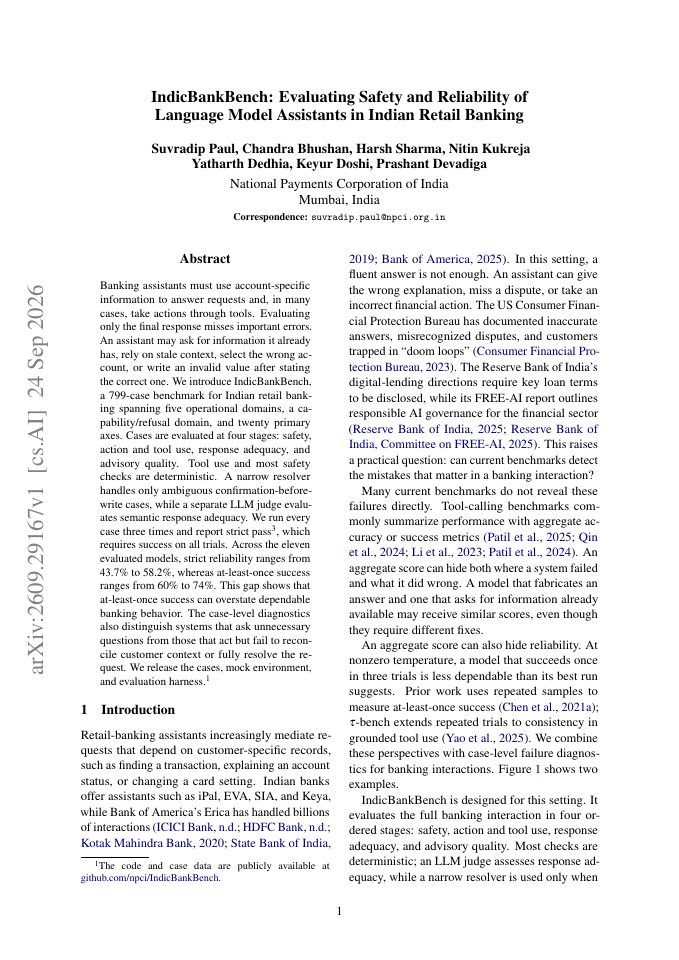
First page of IndicBankBench: Evaluating Safety and Reliability of Language Model Assistants in Indian Retail Banking
agent evaluationtest

IndicBankBench: Evaluating Safety and Reliability of Language Model Assistants in Indian Retail Banking

The benchmark replaces final-response-only evaluation of banking assistants with four-stage scoring (safety, deterministic tool-use checks, response adequacy, advisory quality) and a strict pass^3 metric over repeated runs. It costs building or adapting a mock tool environment, running each case three times, and paying for an LLM judge on semantic adequacy, plus a narrow resolver for ambiguous confirmation cases. The domain is Indian retail banking with 799 cases, so adoption outside that domain requires porting the cases and harness; the LLM judge and resolver components can also introduce nondeterminism that the deterministic checks were designed to avoid.

observed signal
1impl.
123stars
0citations
—claimed gain
abstract onlyReview decisionDownload skill ↓Original paper ↗
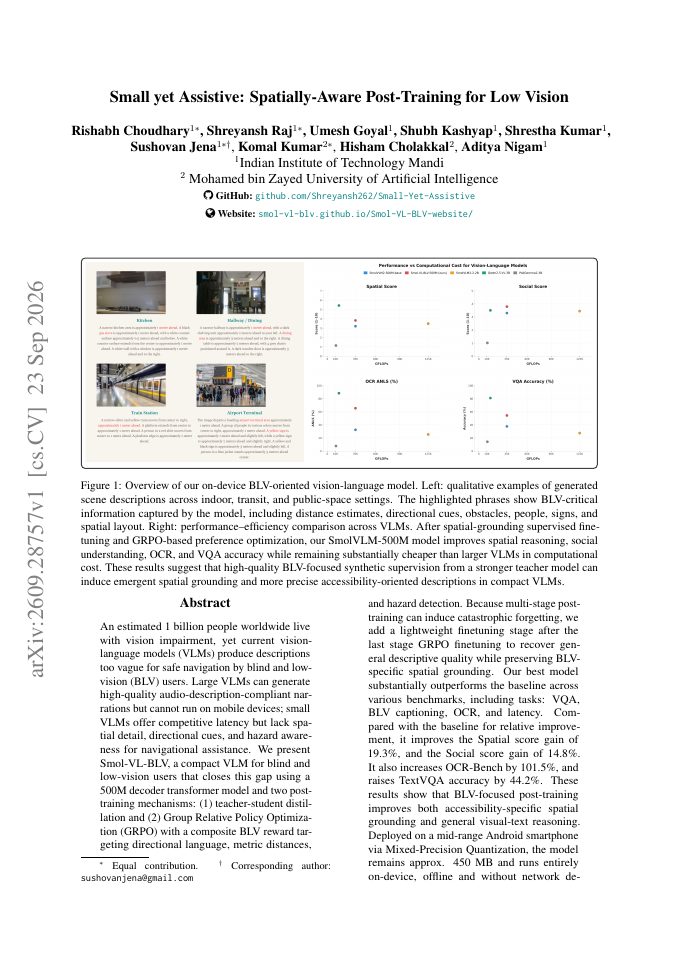
First page of Small yet Assistive: Spatially-Aware Post-Training for Low Vision
distillationtest

Small yet Assistive: Spatially-Aware Post-Training for Low Vision

Replaces reliance on large cloud-hosted VLMs for accessibility-grade scene description by post-training a 500M decoder VLM with teacher-student distillation, GRPO with a composite spatial/hazard reward, and a final lightweight finetune to repair forgetting. Costs a multi-stage post-training pipeline (distillation data, RL reward design, an extra recovery finetune, mixed-precision quantization) plus benchmark validation, rather than foundation-model training compute. Can fail through catastrophic forgetting between stages, reward hacking of the composite BLV metric, and latency or accuracy degradation on weaker mobile hardware than the tested device.

observed signal
1impl.
125stars
0citations
2.015xclaimed gain
abstract onlyReview decisionDownload skill ↓Original paper ↗
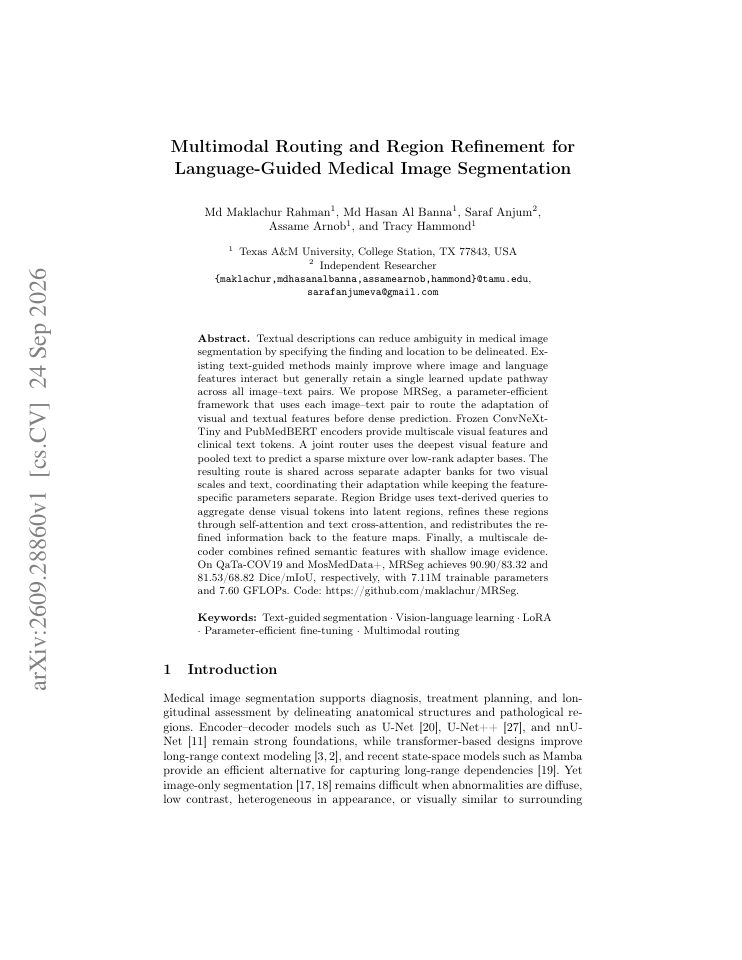
First page of Multimodal Routing and Region Refinement for Language-Guided Medical Image Segmentation
efficient architecturestest

Multimodal Routing and Region Refinement for Language-Guided Medical Image Segmentation

MRSeg replaces single-pathway fine-tuning of vision-language segmentation models with a shared sparse router over low-rank adapter bases applied to frozen ConvNeXt-Tiny and PubMedBERT encoders, plus a region-refinement module before dense decoding. The cost is architectural complexity: router training stability, adapter bank design, and a custom decoder, though the 7.11M trainable parameter count and 7.60 GFLOPs fit comfortably within a 24 GB GPU budget. Failure modes include router collapse to a few adapter bases, degraded generalization to modalities or text styles outside the two evaluation datasets, and limited transfer if the reader's workload is not medical image segmentation.

observed signal
1impl.
125stars
0citations
—claimed gain
abstract onlyReview decisionDownload skill ↓Original paper ↗
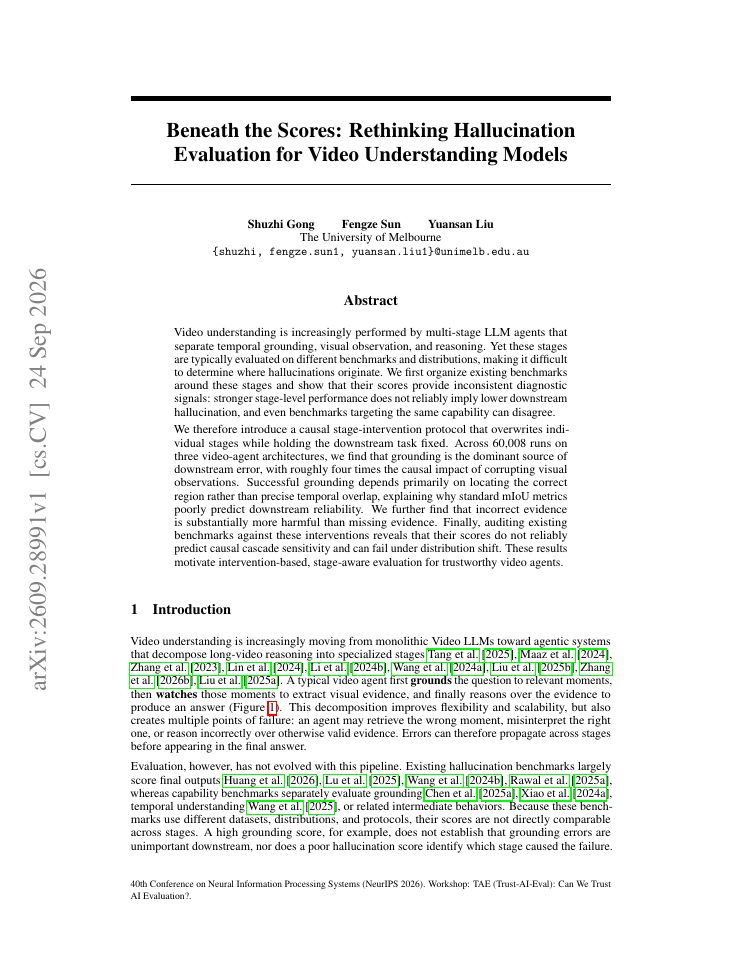
First page of Beneath the Scores: Rethinking Hallucination Evaluation for Video Understanding Models
agent evaluationtest

Beneath the Scores: Rethinking Hallucination Evaluation for Video Understanding Models

The method replaces reliance on aggregate benchmark scores for diagnosing hallucinations in multi-stage video LLM agents with a causal intervention protocol that corrupts or overwrites individual stages (temporal grounding, visual observation, reasoning) while holding the downstream task fixed. It costs evaluation engineering effort: instrumenting the agent to allow stage-level intervention and running many controlled trials (the paper used 60,008 runs across three architectures), which is feasible on a single GPU or via APIs but adds nontrivial evaluation budget. It can fail if the intervention setup does not match the production architecture's stage boundaries, and the finding that benchmark scores do not predict causal cascade sensitivity means teams must build their own intervention harness rather than reuse existing benchmarks.

observed signal
1impl.
125stars
0citations
—claimed gain
abstract onlyReview decisionDownload skill ↓Original paper ↗
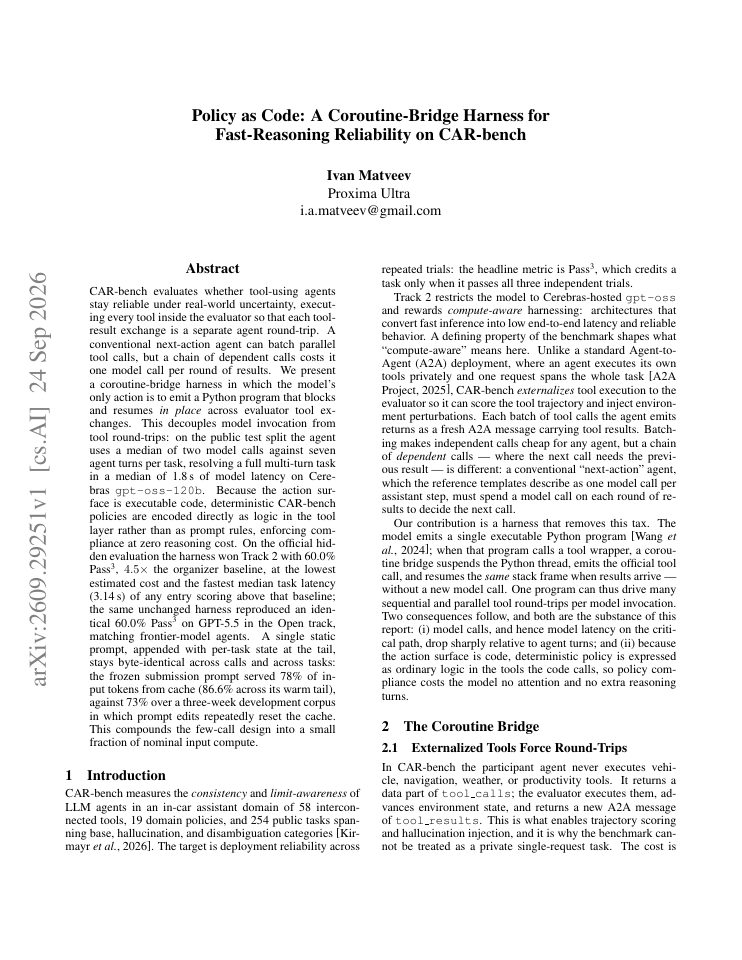
First page of Policy as Code: A Coroutine-Bridge Harness for Fast-Reasoning Reliability on CAR-bench
tool useadopt

Policy as Code: A Coroutine-Bridge Harness for Fast-Reasoning Reliability on CAR-bench

It replaces the conventional next-action agent loop, in which each round of tool results costs one model call, with a harness where the model emits a Python program that blocks and resumes in place across tool exchanges, collapsing multi-turn tasks to a median of two model calls and letting deterministic policies live as code rather than prompt rules. Costs are primarily engineering complexity: a coroutine bridge between model output and the tool executor, sandboxing of model-generated code, and reliance on a static byte-identical prompt whose cache benefits evaporate if the prompt is edited. Failures after adoption include incorrect or unsafe model-generated code executing in the tool layer, tasks that do not decompose into a single blocking program, and reduced effectiveness on models too weak to write correct multi-step control flow in one shot.

observed signal
1impl.
125stars
0citations
4.5xclaimed gain
abstract onlyReview decisionDownload skill ↓Original paper ↗
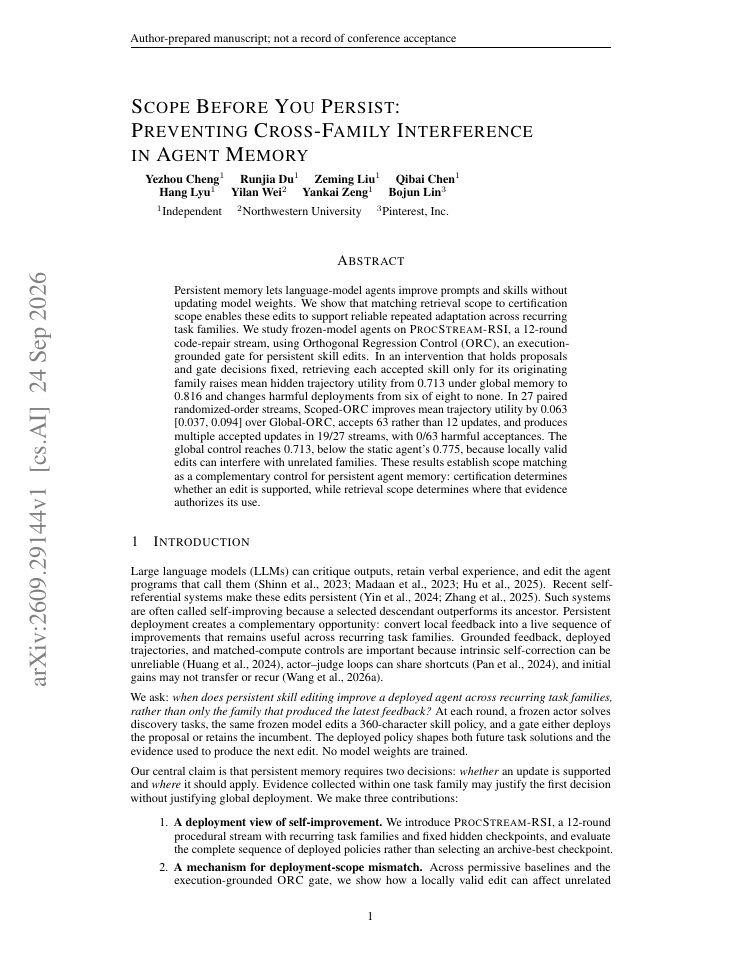
First page of Scope Before You Persist: Preventing Cross-Family Interference in Agent Memory
memory and contexttest

Scope Before You Persist: Preventing Cross-Family Interference in Agent Memory

The method replaces globally retrieved persistent skill edits with retrieval scoped to the task family where each edit was certified, layered on an execution-grounded acceptance gate (ORC). It costs an additional routing mechanism to classify incoming tasks into families and tag stored edits, plus reduced edit reuse across families; no extra model training or GPU memory is required. It can fail when task families are poorly defined or drifting, causing misclassification that either blocks valid edits or recreates the cross-family interference it is meant to prevent.

observed signal
1impl.
131stars
0citations
1.14xclaimed gain
abstract onlyReview decisionDownload skill ↓Original paper ↗
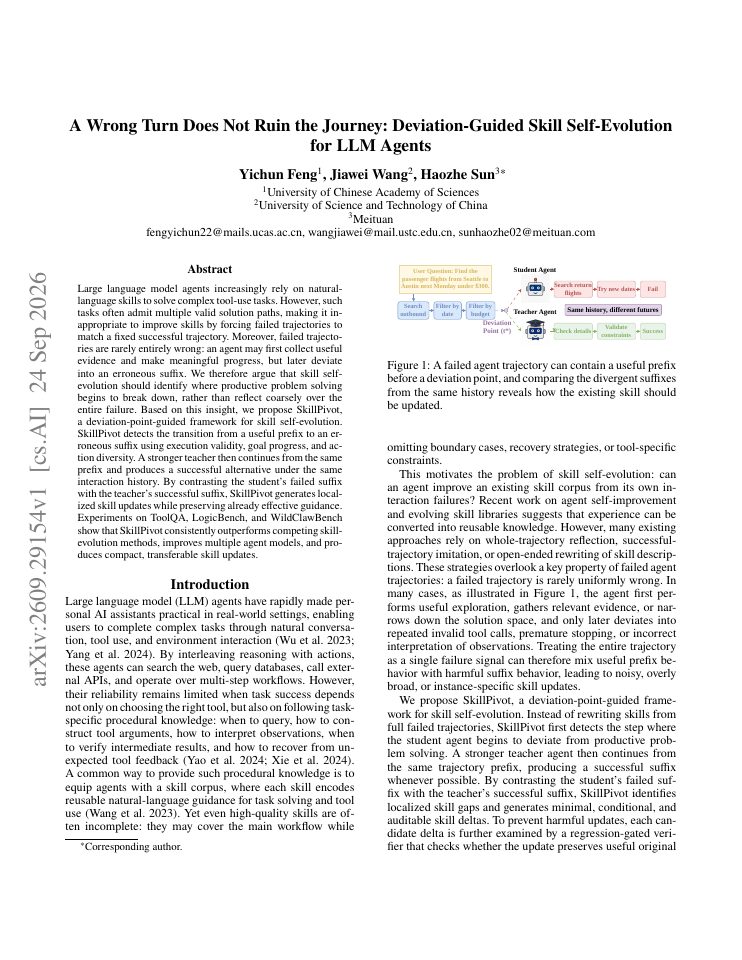
First page of A Wrong Turn Does Not Ruin the Journey: Deviation-Guided Skill Self-Evolution for LLM Agents
failure recoverytest

A Wrong Turn Does Not Ruin the Journey: Deviation-Guided Skill Self-Evolution for LLM Agents

SkillPivot replaces coarse whole-trajectory reflection (or forcing failed runs to imitate a fixed successful trajectory) with localized skill updates generated by contrasting the student's erroneous suffix against a teacher's successful continuation from the same prefix. It costs an extra stronger teacher model to complete trajectories, deviation-point detection (execution validity, goal progress, action diversity), and additional API calls per failed trajectory, plus a skill store the agent must maintain. It can fail if deviation-point detection mislocates the breakdown (editing still-valid guidance), if no teacher stronger than the student is available within budget, or if skill updates overfit to the three evaluated benchmarks and do not transfer to the reader's task distribution.

observed signal
1impl.
131stars
0citations
—claimed gain
abstract onlyReview decisionDownload skill ↓Original paper ↗
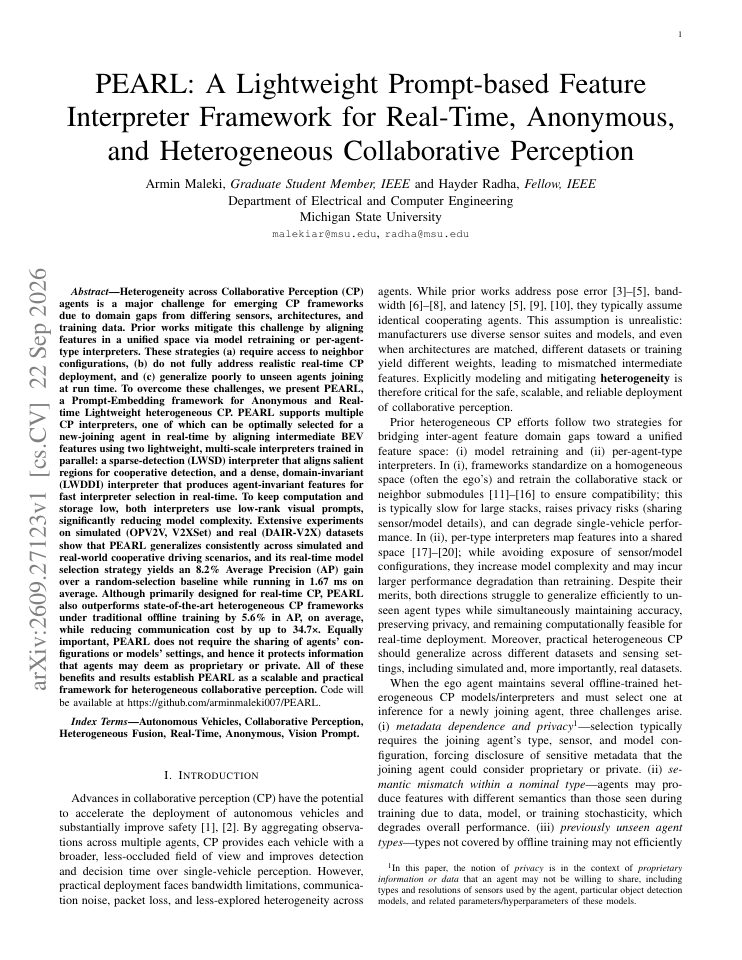
First page of PEARL: A Lightweight Prompt-based Feature Interpreter Framework for Real-Time, Anonymous, and Heterogeneous Collaborative Perception
multi-agent orchestrationwatch

PEARL: A Lightweight Prompt-based Feature Interpreter Framework for Real-Time, Anonymous, and Heterogeneous Collaborative Perception

PEARL replaces per-agent-type interpreter retraining and configuration sharing in collaborative vehicle perception with two lightweight multi-scale interpreters using low-rank visual prompts, plus a real-time interpreter-selection step for anonymously joining agents. It costs the training and maintenance of two parallel interpreters and adds a small selection latency (1.67 ms), while keeping communication and compute low through low-rank prompts. It can fail when new agents' sensor domains fall outside what the domain-invariant interpreter was trained to cover, and all reported gains come from driving-perception benchmarks (OPV2V, V2XSet, DAIR-V2X), so transfer to other collaborative settings is unverified.

observed signal
0impl.
0stars
0citations
34.7xclaimed gain
abstract onlyReview decisionDownload skill ↓Original paper ↗
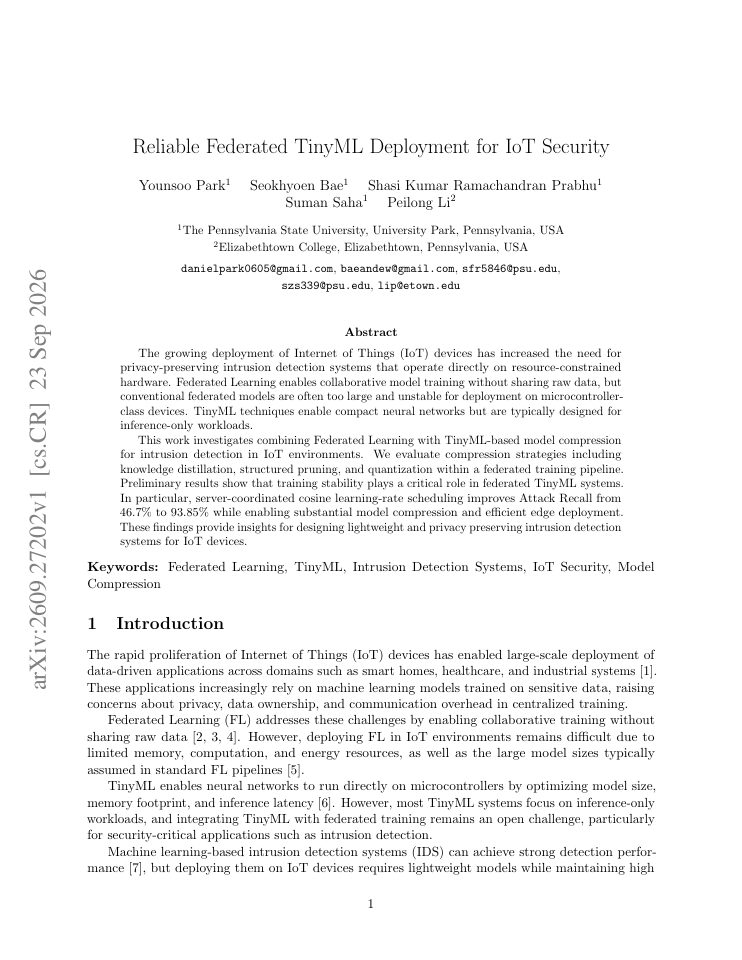
First page of Reliable Federated TinyML Deployment for IoT Security
efficient trainingwatch

Reliable Federated TinyML Deployment for IoT Security

The method replaces conventional large federated intrusion-detection models with compressed TinyML models (distillation, structured pruning, quantization) trained under a server-coordinated cosine learning-rate schedule. The cost is a federated orchestration layer across edge devices, compression-induced quality risk, and added pipeline complexity relative to centralized training on a single GPU. It can fail through training instability in the federated setting (the paper's own central finding), degraded recall under aggressive pruning or quantization, and deployment constraints that only materialize on actual microcontroller hardware.

observed signal
0impl.
0stars
0citations
—claimed gain
abstract onlyReview decisionDownload skill ↓Original paper ↗
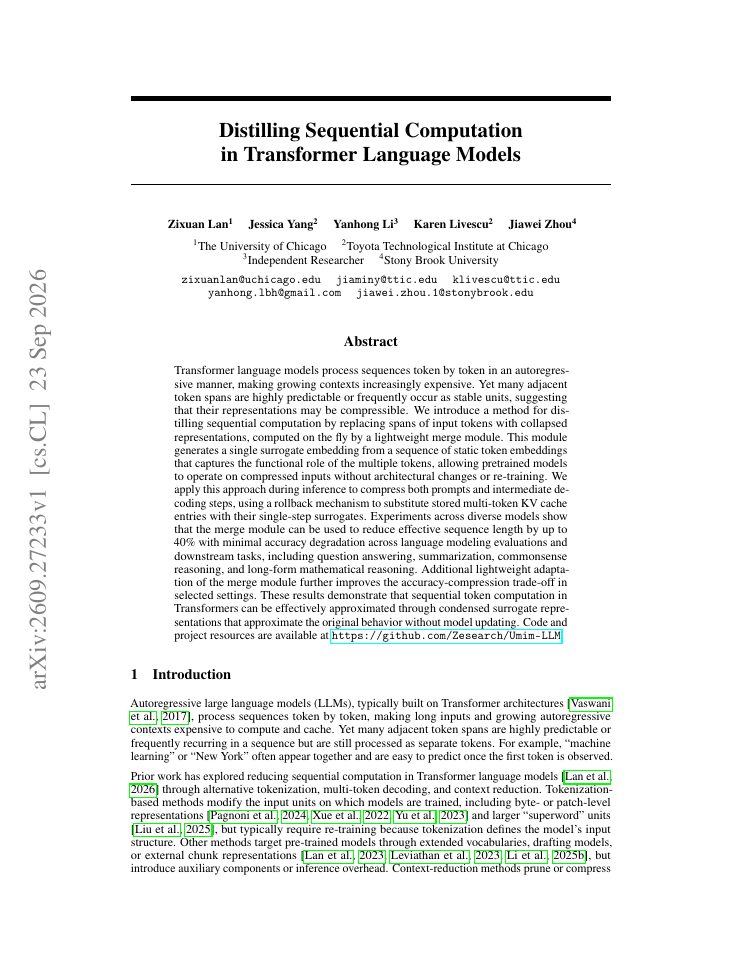
First page of Distilling Sequential Computation in Transformer Language Models
KV cachetest

Distilling Sequential Computation in Transformer Language Models

The method replaces multi-token spans in the prompt and stored KV cache entries with single surrogate embeddings produced by a lightweight merge module, applied to pretrained models without architectural changes or fine-tuning, using a rollback mechanism during decoding. It costs training and maintaining the merge module (plus optional lightweight adaptation for better trade-offs) and introduces some accuracy degradation that grows with the compression rate. It can fail on workloads where predictable-span assumptions break down, such as code, exact-copy retrieval, or numeric content, where merging tokens loses functionally critical information.

observed signal
0impl.
0stars
0citations
1.67xclaimed gain
abstract onlyReview decisionDownload skill ↓Original paper ↗
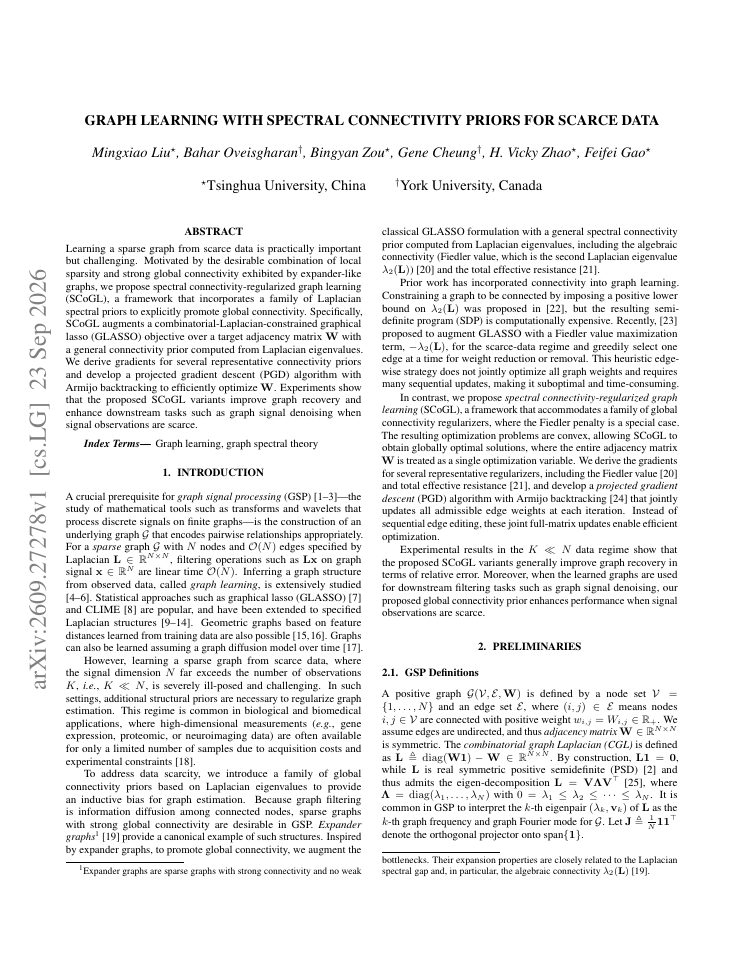
First page of Graph Learning with Spectral Connectivity Priors for Scarce Data
othernot applicable

Graph Learning with Spectral Connectivity Priors for Scarce Data

SCoGL replaces standard combinatorial-Laplacian-constrained graphical lasso for learning sparse graphs by adding Laplacian eigenvalue-based connectivity priors, optimized via projected gradient descent with Armijo backtracking. It costs an iterative eigen-decomposition-heavy optimization loop and prior/gradient selection for each variant, which adds implementation complexity without addressing model inference or training efficiency. It can fail when the expander-like connectivity assumption does not match the true graph structure, when the nonconvex PGD converges to poor local minima, or when the data regime is not actually scarce, since the reported gains are specific to few-observation graph recovery and signal denoising.

observed signal
0impl.
0stars
0citations
—claimed gain
abstract onlyReview decisionDownload skill ↓Original paper ↗
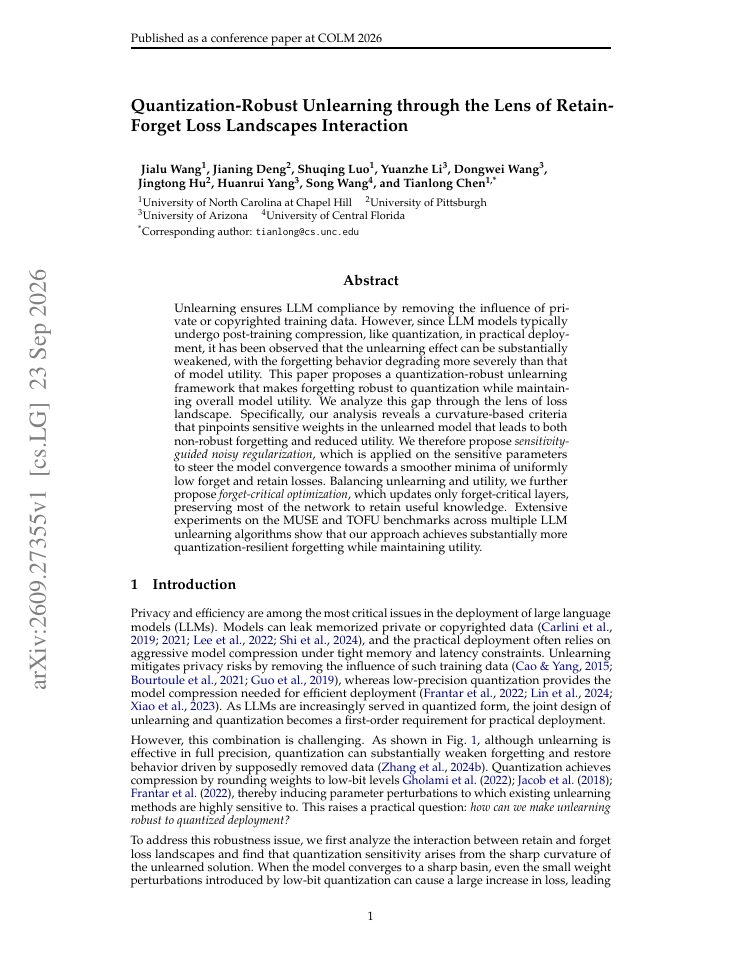
First page of Quantization-Robust Unlearning through the Lens of Retain-Forget Loss Landscapes Interaction
quantizationtest

Quantization-Robust Unlearning through the Lens of Retain-Forget Loss Landscapes Interaction

It replaces standard unlearning fine-tuning, whose forgetting effect degrades after post-training quantization, with curvature-based identification of sensitive weights, noise regularization toward flatter minima, and updates restricted to forget-critical layers. The cost is additional curvature computation, per-layer sensitivity analysis, and extra unlearning-stage optimization rather than any change to inference cost. It can fail if the curvature criterion misidentifies sensitive parameters, if the regularization weight is mis-tuned so forgetting is incomplete or utility drops, and its benefits are unverified outside the MUSE and TOFU benchmarks and the tested quantization settings.

observed signal
0impl.
0stars
0citations
—claimed gain
abstract onlyReview decisionDownload skill ↓Original paper ↗
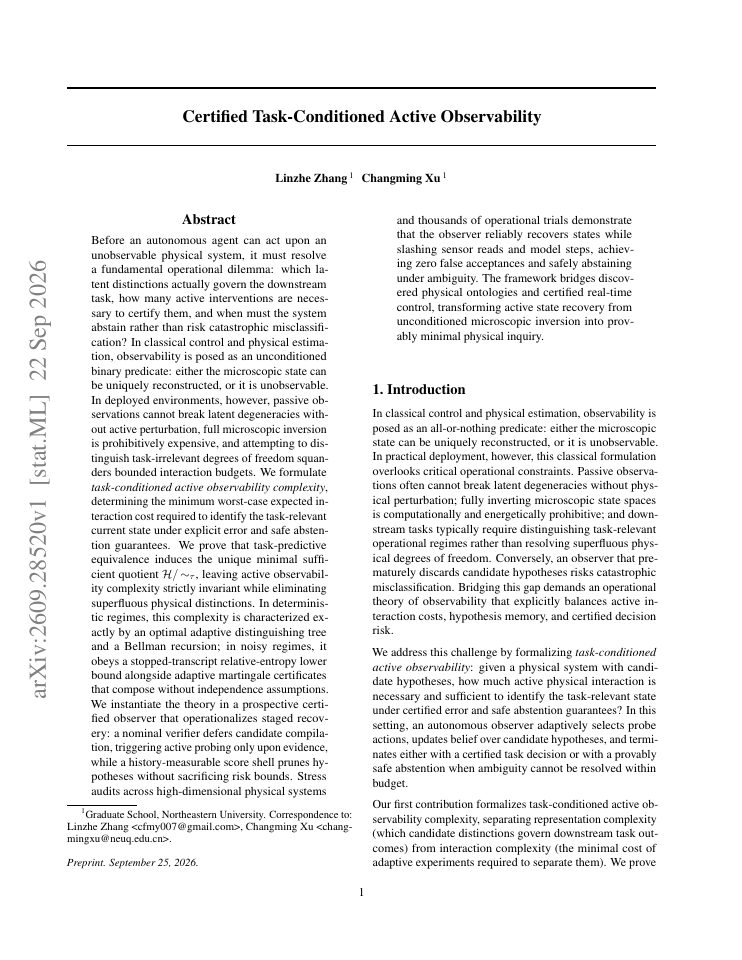
First page of Certified Task-Conditioned Active Observability
othernot applicable

Certified Task-Conditioned Active Observability

This formalizes and replaces classical binary observability with a task-conditioned active probing framework that identifies only task-relevant latent states under certified error and safe-abstention guarantees, using adaptive distinguishing trees and relative-entropy lower bounds. It costs implementation of a staged verifier, hypothesis-pruning score shell, and adaptive probing logic, plus interaction budget for physical interventions on the target system. It applies to autonomous agents acting on unobservable physical systems and can fail if the task-predictive equivalence relation is misspecified, if noise models underlying the certificates are wrong, or if the domain is software/LLM inference rather than embodied sensing.

observed signal
0impl.
0stars
0citations
—claimed gain
abstract onlyReview decisionDownload skill ↓Original paper ↗
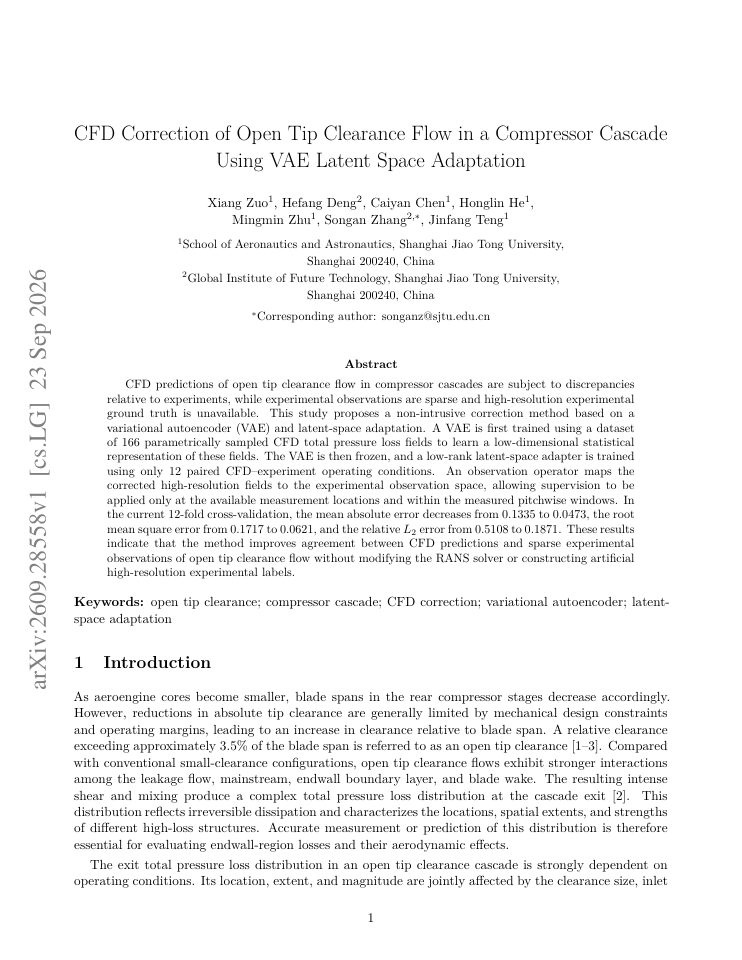
First page of CFD Correction of Open Tip Clearance Flow in a Compressor Cascade Using VAE Latent Space Adaptation
othernot applicable

CFD Correction of Open Tip Clearance Flow in a Compressor Cascade Using VAE Latent Space Adaptation

The method replaces modifying the RANS solver or constructing artificial high-resolution experimental labels by freezing a VAE trained on 166 CFD loss fields and fitting only a low-rank latent adapter from 12 paired CFD-experiment conditions via an observation operator. Cost is moderate: one VAE training pass plus a small adapter fit, all feasible on a single GPU, but it requires an existing parametric CFD dataset and paired sparse measurements. It can fail outside the sampled parameter space, the 12-fold cross-validation on 12 conditions is weak evidence of generalization, and correctness is only enforced at sparse measurement windows, so unobserved field regions may remain physically wrong.

observed signal
0impl.
1stars
0citations
2.8xclaimed gain
abstract onlyReview decisionDownload skill ↓Original paper ↗
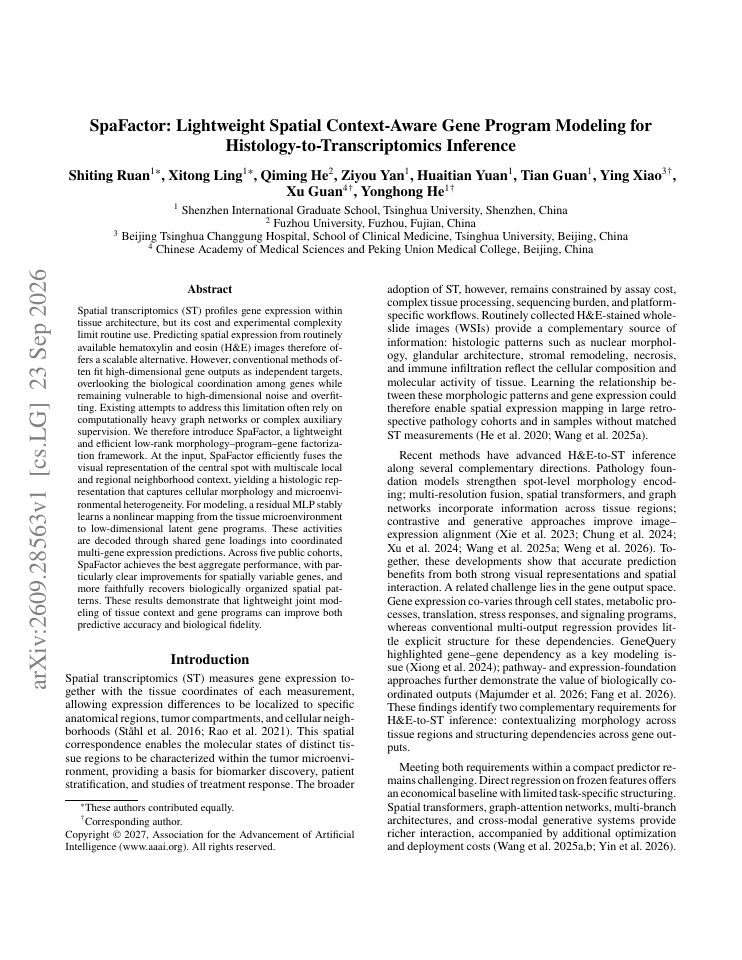
First page of SpaFactor: Lightweight Spatial Context-Aware Gene Program Modeling for Histology-to-Transcriptomics Inference
otherwatch

SpaFactor: Lightweight Spatial Context-Aware Gene Program Modeling for Histology-to-Transcriptomics Inference

SpaFactor replaces per-gene independent regression and heavier graph-neural-network approaches for predicting spatial gene expression from H&E images with a residual MLP mapping multiscale morphology features into low-dimensional latent gene programs decoded through shared gene loadings. Its cost is modest: a lightweight MLP with multiscale context fusion that fits constrained GPU budgets and avoids graph computation or auxiliary supervision pipelines. It can fail when target cohorts differ from the five public benchmarks, when histology image encoders do not transfer across scanners or staining protocols, and when the low-rank program assumption cannot capture genes whose expression is not coordinated with the learned programs.

observed signal
0impl.
0stars
0citations
—claimed gain
abstract onlyReview decisionDownload skill ↓Original paper ↗
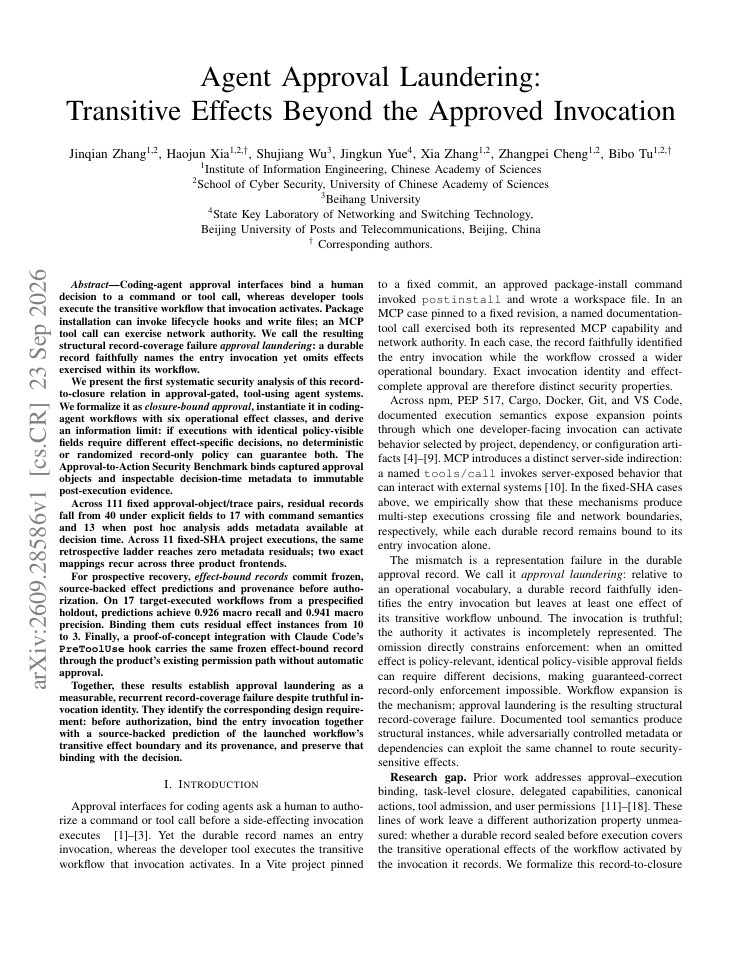
First page of Agent Approval Laundering: Transitive Effects Beyond the Approved Invocation
safety and guardrailstest

Agent Approval Laundering: Transitive Effects Beyond the Approved Invocation

It replaces invocation-level approval logging, where the human decision is bound only to the entry command or MCP call, with closure-bound records that commit a frozen, source-backed prediction of the workflow's transitive effects (lifecycle hooks, file writes, network access) before authorization. The cost is added tooling in the permission path (a PreToolUse hook that computes and carries the frozen record), pre-execution analysis latency, and the engineering burden of maintaining effect predictions and provenance for each tool. Prediction errors are the residual failure mode: the holdout still left 3 of 10 residual effects unbound, so effects outside the six modeled classes or missed by the predictor remain invisible to the approval record, and the evidence base is small (111 pairs, 17 holdout workflows, one product integration).

observed signal
0impl.
4stars
0citations
3.33xclaimed gain
abstract onlyReview decisionDownload skill ↓Original paper ↗

Research signals

Three views of the same evidence: adoption against attention, publication cadence by research area, and reported gains when coverage is sufficient.

color = research area

01 · attention × adoption

The research frontier

Look to the upper left for independent implementation before mass attention.

compare by
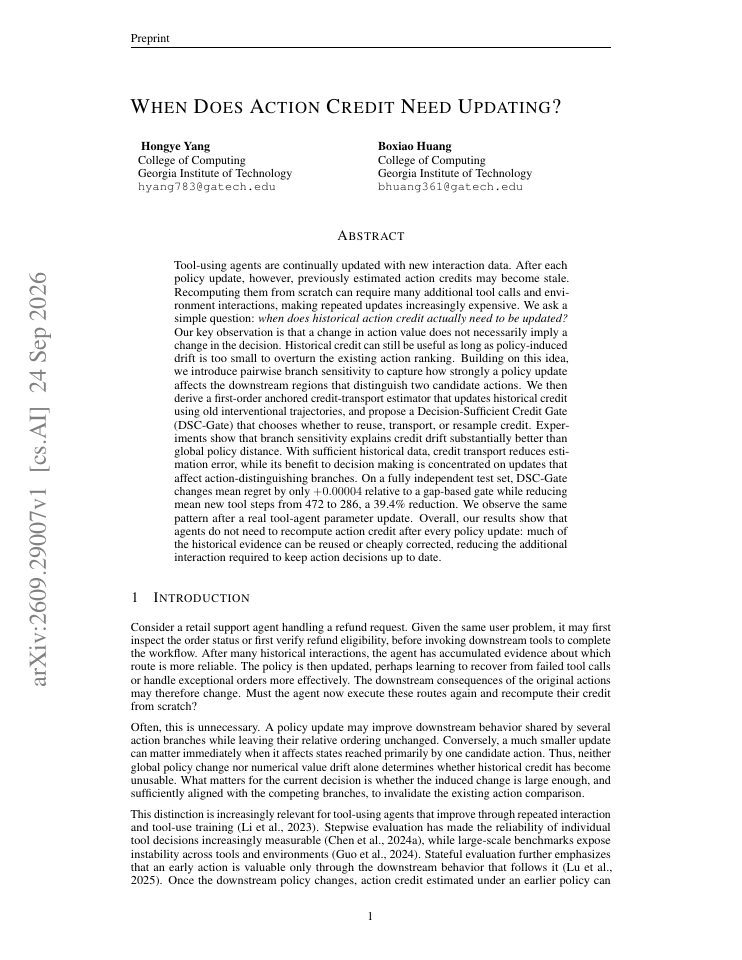
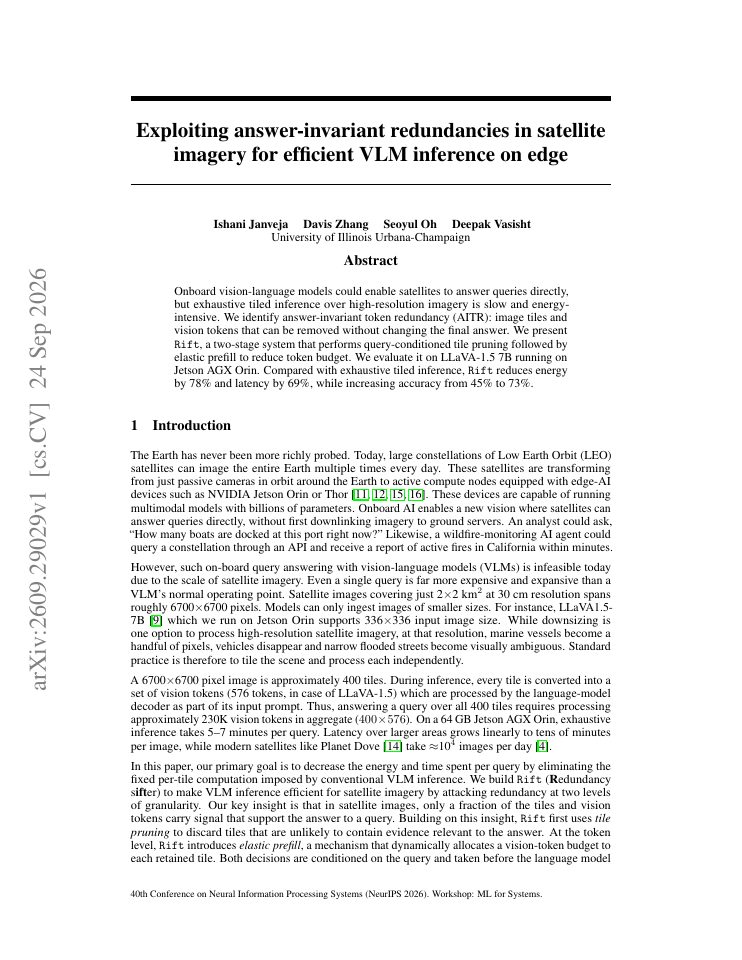
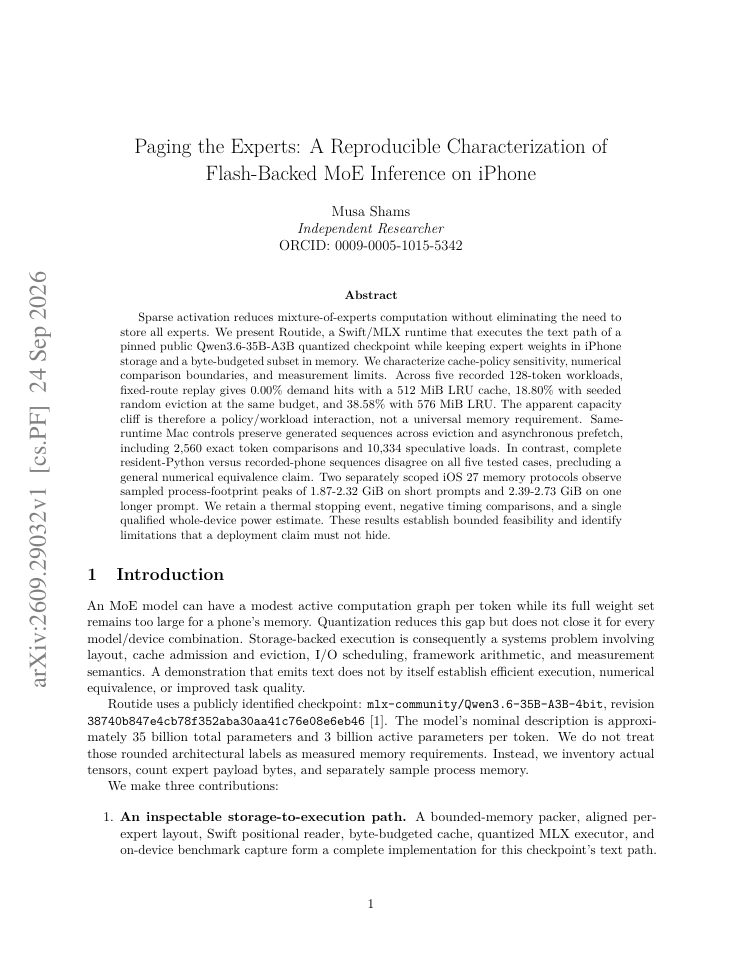
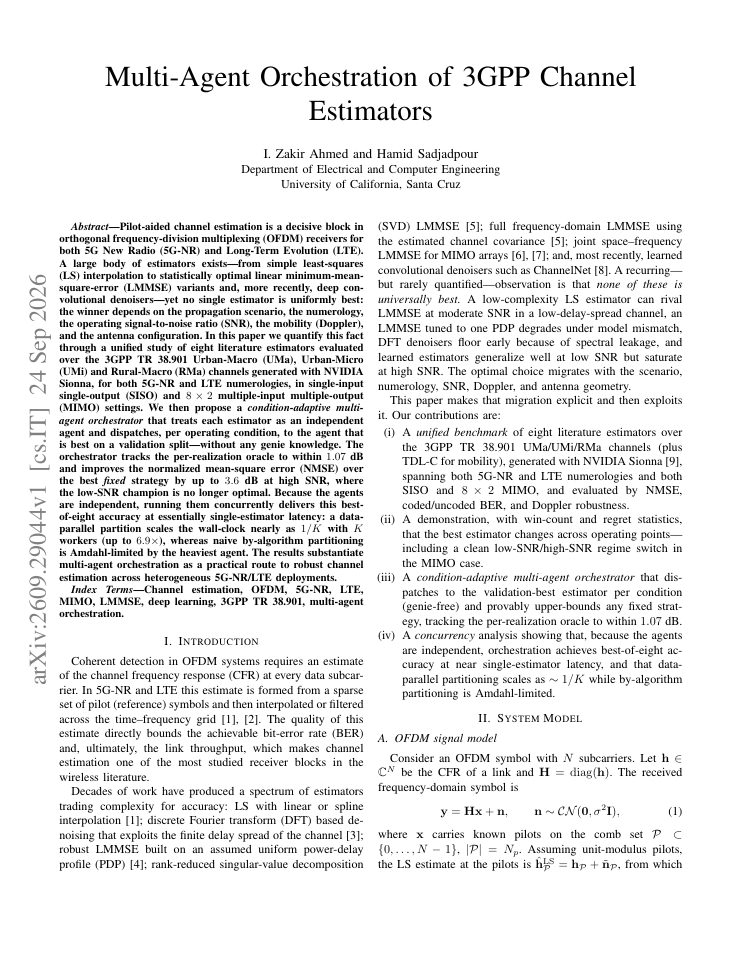
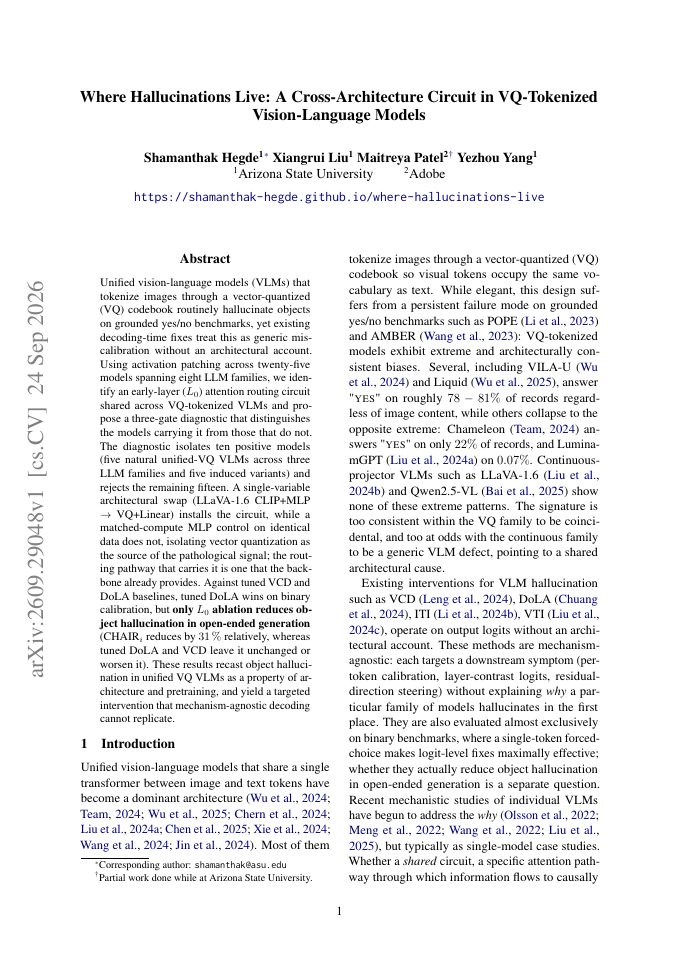
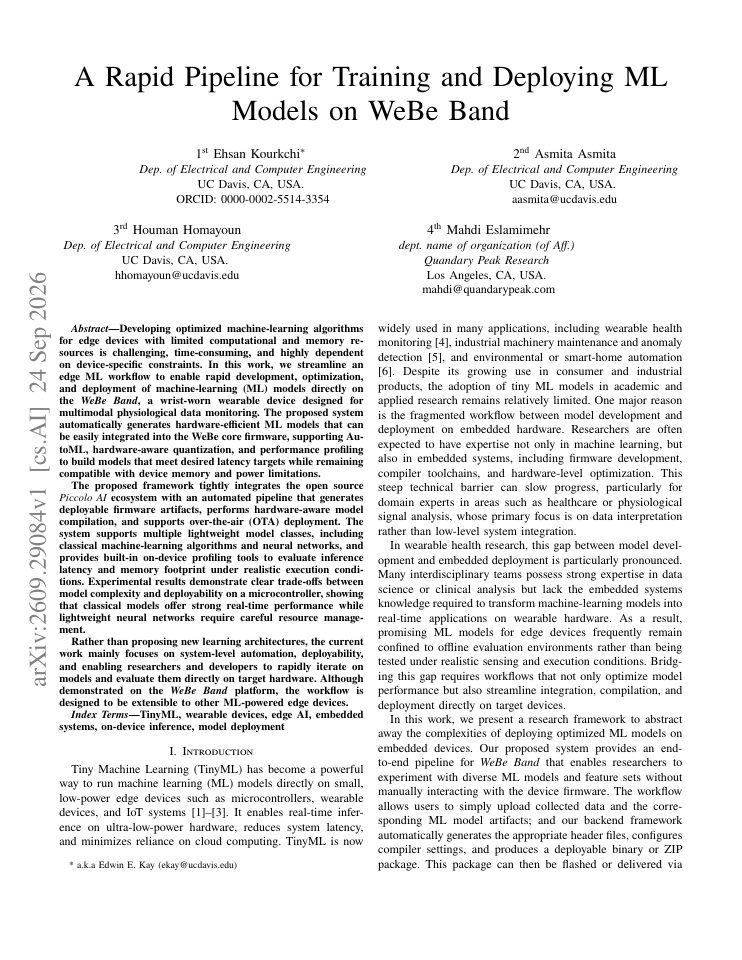
Each point represents one paper. Higher means more independent implementations; farther right means more GitHub stars.MetaKV: Adaptive KV Cache Compression for Constrained LLM Inference: 0 GitHub stars; 2 independent implementationsMTVA-Bench: Evaluating the Language Model Inside Cascaded Voice Agents: 4 GitHub stars; 3 independent implementationsPEARL: A Lightweight Prompt-based Feature Interpreter Framework for Real-Time, Anonymous, and Heterogeneous Collaborative Perception: 0 GitHub stars; 0 independent implementationsReliable Federated TinyML Deployment for IoT Security: 0 GitHub stars; 0 independent implementationsDistilling Sequential Computation in Transformer Language Models: 0 GitHub stars; 0 independent implementationsGraph Learning with Spectral Connectivity Priors for Scarce Data: 0 GitHub stars; 0 independent implementationsQuantization-Robust Unlearning through the Lens of Retain-Forget Loss Landscapes Interaction: 0 GitHub stars; 0 independent implementationsCertified Task-Conditioned Active Observability: 0 GitHub stars; 0 independent implementationsCFD Correction of Open Tip Clearance Flow in a Compressor Cascade Using VAE Latent Space Adaptation: 1 GitHub star; 0 independent implementationsSpaFactor: Lightweight Spatial Context-Aware Gene Program Modeling for Histology-to-Transcriptomics Inference: 0 GitHub stars; 0 independent implementationsPersistent Billable State: Denial-of-Wallet Attacks and Defenses in Tool-Calling LLM Agents: 21 GitHub stars; 3 independent implementationsAgent Approval Laundering: Transitive Effects Beyond the Approved Invocation: 4 GitHub stars; 0 independent implementationsProgressive Skill Discovery as Access Control for Tool-Using LLM Agents: Structural Governance through Role-Scoped Capability Delivery: 14 GitHub stars; 2 independent implementationsSpooftral: Can Voxtral Audio-Language Model Detect Speech Spoofing?: 0 GitHub stars; 0 independent implementationsTemporal Taxation Compounds Under Post-Training Compression of Whisper Models: 4 GitHub stars; 1 independent implementationSoundness Checking of Taint Flow Models: 4 GitHub stars; 0 independent implementationsSmall yet Assistive: Spatially-Aware Post-Training for Low Vision: 125 GitHub stars; 1 independent implementationPhysics-Guided Multi-Objective Deep Learning for Ultrasound RF Data Interpolation in Resource-Constrained Imaging: 0 GitHub stars; 0 independent implementationsMultimodal Routing and Region Refinement for Language-Guided Medical Image Segmentation: 125 GitHub stars; 1 independent implementationOn the Effectiveness of Kernel-Level Evidence for Agent Security: 14 GitHub stars; 1 independent implementationControl the Harness, Control the Cost: Routing and Governing AI Coding Agents in the Enterprise: 10 GitHub stars; 0 independent implementationsBack to the Definition: Estimating Step-Level Advantages via Trajectory Graphs for Agentic Reinforcement Learning: 14 GitHub stars; 1 independent implementationSame Bit Width, Different Outcomes: Post-Training Quantization of Text-to-Speech Across Architectures: 672 GitHub stars; 2 independent implementationsPersonalized Korean Lipreading as Visual Speech Recognition: Transfer, Census and Adaptation on OLKAVS: 0 GitHub stars; 0 independent implementationsBeneath the Scores: Rethinking Hallucination Evaluation for Video Understanding Models: 125 GitHub stars; 1 independent implementationAutomatic Rank Allocation for Low-Rank Adaptation in Large Language Models via lp Regularization: 4 GitHub stars; 0 independent implementationsWhen Does Action Credit Need Updating?: 0 GitHub stars; 0 independent implementationsExploiting answer-invariant redundancies in satellite imagery for efficient VLM inference on edge: 121 GitHub stars; 0 independent implementationsPaging the Experts: A Reproducible Characterization of Flash-Backed MoE Inference on iPhone: 0 GitHub stars; 0 independent implementationsMulti-Agent Orchestration of 3GPP Channel Estimators: 10 GitHub stars; 0 independent implementationsWhere Hallucinations Live: A Cross-Architecture Circuit in VQ-Tokenized Vision-Language Models: 121 GitHub stars; 0 independent implementationsSLCA-GRPO: Resolving Cross-Segment Credit Misattribution in Tool-Calling RL: 122 GitHub stars; 1 independent implementationFrom Self-Distillation to Self-Practice: Privileged Information for Multi-Turn Agents: 135 GitHub stars; 2 independent implementationsA Rapid Pipeline for Training and Deploying ML Models on WeBe Band: 0 GitHub stars; 0 independent implementationsWhere Does Exactly-Once Live? Model, Harness, and Tool-Contract Effects on Duplicate Side Effects in LLM Agents: 14 GitHub stars; 1 independent implementationScope Before You Persist: Preventing Cross-Family Interference in Agent Memory: 131 GitHub stars; 1 independent implementationA Wrong Turn Does Not Ruin the Journey: Deviation-Guided Skill Self-Evolution for LLM Agents: 131 GitHub stars; 1 independent implementationIndicBankBench: Evaluating Safety and Reliability of Language Model Assistants in Indian Retail Banking: 123 GitHub stars; 1 independent implementationPolicy as Code: A Coroutine-Bridge Harness for Fast-Reasoning Reliability on CAR-bench: 125 GitHub stars; 1 independent implementationSkinAgent AI: A Safety-Grounded Multimodal Agentic Framework for Non-Diagnostic Skincare Support: 138 GitHub stars; 2 independent implementationsRufus-Air: An Open LLM Post-Training Recipe: 121 GitHub stars; 1 independent implementationIterSynth: Rethinking Deep Search Agents via Role-Decoupled Iterative Synthesis: 137 GitHub stars; 3 independent implementations

Papers above 1000 stars or 200 citations are not scored. They have already broken through the attention threshold, while Paperraft is designed to identify earlier signals.

02 · cadence

Research areas over time

Compare monthly publication volume on a shared scale and calendar.

coding agentsmax 7Sep 26: 2 papersSep 26Sep 26efficient architecturesmax 7Sep 26: 1 paperSep 26Sep 26agent evaluationmax 7Sep 26: 4 papersSep 26Sep 26KV cachemax 7Sep 26: 2 papersSep 26Sep 26distillationmax 7Sep 26: 1 paperSep 26Sep 26sparsity and pruningmax 7Sep 26: 3 papersSep 26Sep 26memory and contextmax 7Sep 26: 1 paperSep 26Sep 26multi-agent orchestrationmax 7Sep 26: 2 papersSep 26Sep 26othermax 7Sep 26: 6 papersSep 26Sep 26planning and decompositionmax 7Sep 26: 1 paperSep 26Sep 26quantizationmax 7Sep 26: 2 papersSep 26Sep 26failure recoverymax 7Sep 26: 2 papersSep 26Sep 26safety and guardrailsmax 7Sep 26: 7 papersSep 26Sep 26efficient trainingmax 7Sep 26: 6 papersSep 26Sep 26tool usemax 7Sep 26: 2 papersSep 26Sep 26

Every panel uses the same calendar and vertical scale. An empty column means no papers were recorded.

Method under scrutiny

Inspect the highest-ranked paper, every repository behind its signal, and the rule used to classify each one.

MetaKV: Adaptive KV Cache Compression for Constrained LLM Inference

KV cache · test · 2 of 2 implementations are independent

MetaKV replaces a single fixed KV cache compression configuration with per-prompt selection among existing methods (KVQuant, H2O, RocketKV, FP16) guided by lightweight predictors of latency, peak memory, and correctness. The cost is training and maintaining three prediction models plus a selection step per prompt, adding engineering complexity and a small inference-time overhead on top of the underlying compressors. It can fail if the accuracy or latency predictors mispredict on out-of-distribution prompts or on hardware and models different from the evaluation setup, causing constraint violations or suboptimal choices.

Exclusions and controls

Every exclusion is counted and published.

Exclusion counts were not recorded for this edition.

0 previously indexed papers were rechecked in this run.

Paperraft tracks one signal: how many independent implementations a paper attracts on GitHub after author-owned repositories are removed. This is a discovery signal to investigate, not a measure of implementation quality.

It does not claim that a method works. Paperraft runs no reproduction benchmarks. Reported gains remain author claims until independently tested. Papers above the attention threshold are excluded because this publication is designed to identify research before consensus forms.